
You’ve probably seen the tweets. “Grok just crushed ChatGPT on every benchmark.” “GPT-5 is cooked.” “Elon’s AI is finally the king.” And then, right underneath, a different crowd replying: “Grok can’t even debug a basic Python script, stop the hype.” So which is it? Is Grok actually better than ChatGPT, or is this just another round of X-fueled tribalism making us all dumber?
Let’s be honest, the Grok vs ChatGPT debate has become one of the loudest fights in AI, and most of the takes out there are either fanboy nonsense or lazy comparisons written by someone who spent 15 minutes with one tool. I’ve been using both daily for over a year. I’ve burned through Grok 4, Grok 4.2, and now Grok 4.3. I’ve run GPT-5, GPT-5.2, and GPT-5.4 into the ground on everything from code reviews to client emails to dumb dinner-party questions. And after all that? I’ve got opinions. Strong ones.
Here’s the real breakdown what each tool actually wins at, where the hype crumbles, and which one is worth your money in 2026.
Is Grok Actually Better Than ChatGPT?
No, Grok isn’t better than ChatGPT, but it’s also not worse. It just plays a completely different game. ChatGPT is the steadier, more polished professional that handles serious work with fewer surprises. Grok is the fast-talking internet native that’s absolutely unbeatable when you need to know what the world is saying right now. They’re both excellent. They’re both flawed. And picking between them really depends on what you actually do all day.
If I had to give you one sentence: ChatGPT is the tool I trust with billable work. Grok is the tool I open when I want to feel the pulse of the internet.
What Is Grok, Really? (A Quick Refresher)
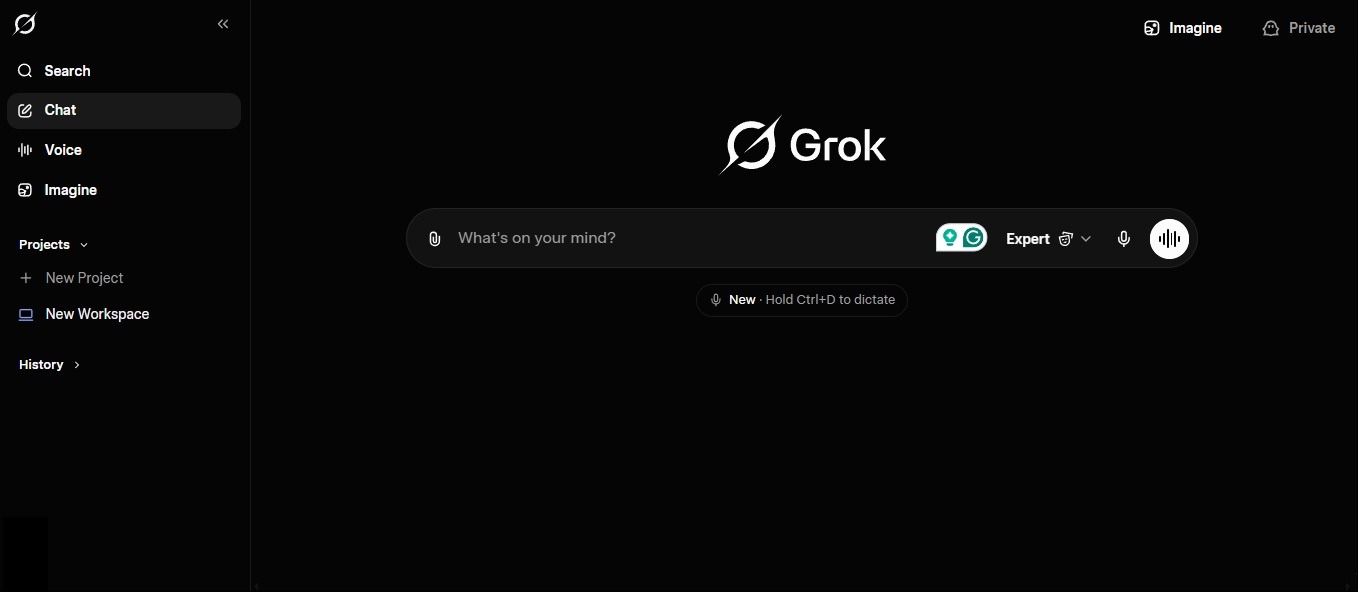
Grok is xAI’s chatbot, Elon Musk’s company, yes, the same one wired directly into X (formerly Twitter). The current flagship model is Grok 4, with faster variants like Grok 4 Fast and the enterprise-grade Grok 4.3 rolling out quietly through late 2025 and into early 2026. The headline? A 256,000-token context window, deep real-time search, image and voice generation, and an unmistakable personality that’s a lot looser than OpenAI’s carefully sanitized output.
Grok comes in several flavors:
- Free version through X or grok.com (limited usage, image gen mostly off)
- SuperGrok Lite – $10/month
- SuperGrok – $30/month (the one most power users pick)
- SuperGrok Heavy – $300/month (for the “I want the biggest model available” crowd)
It’s also bundled with X Premium ($8/month) and Premium+ ($30/month), which is honestly where most Grok users start.
What Is ChatGPT?
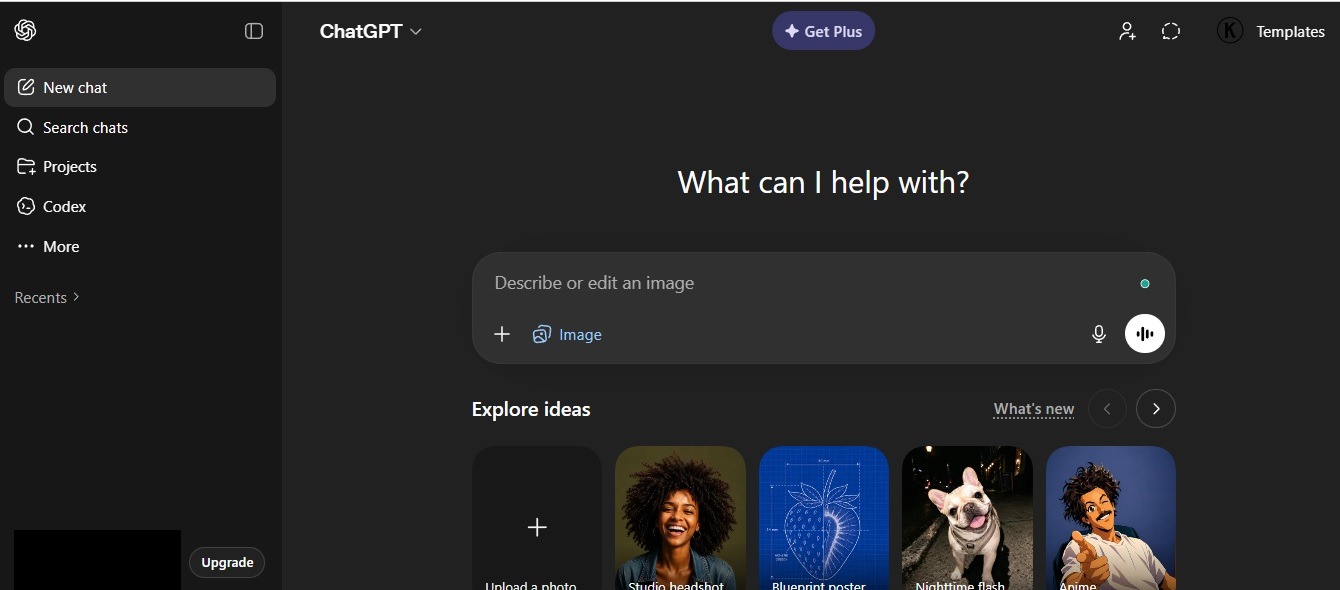
You already know ChatGPT. It’s the one that started the whole modern AI wave back in 2022, and it’s the app your mom’s coworkers finally figured out how to use last year. But the 2026 version is a very different beast from the ChatGPT people remember.
We’re now on GPT-5.4 as the flagship reasoning model, with GPT-5.2 Thinking and GPT-5 Pro powering different tiers. Beyond the model, ChatGPT has evolved into a platform: Canvas (a collaborative workspace), Codex (the coding agent), Agent Mode, scheduled tasks, desktop apps for Mac and Windows, and deep integrations with Google Drive, Slack, GitHub, Canva, Photoshop, and more.
The pricing tree:
- Free – Usage-limited, GPT-5 access
- ChatGPT Go – $8/month (ad-supported, bigger quotas)
- ChatGPT Plus – $20/month (the sweet spot for most people)
- ChatGPT Pro – $200/month (the unlimited everything tier)
- Business/Enterprise – starts at $25/user/month
Here’s the thing that often gets buried in these comparisons: the product around ChatGPT has matured way faster than Grok’s. That matters more than any single benchmark.
Grok vs ChatGPT: The Head-to-Head That Actually Matters
Forget the sterile spec sheets for a second. Let me walk you through the real-world categories where these tools actually compete.
Coding: ChatGPT Wins (And It’s Not Close)
This is where I expected Grok to be competitive, and it kinda isn’t. Grok 4 is fast — it pumps out code at something like 58 tokens per second, which feels great in the moment. But ask it to debug a multi-file project, trace an async bug across three files, or refactor legacy code without breaking anything? It stumbles way more than GPT-5.4 does.
ChatGPT’s Codex agent is the killer feature here. You can give it a GitHub repo, a task description, and walk away. It’ll come back with a PR. Grok has no real equivalent. One of the most talked-about real-world Grok 4 tests a developer ran head-to-head coding problems against OpenAI’s o3 and Claude Opus, which had Grok stumbling on Python debugging and losing coherence on longer refactors. The benchmark wins didn’t translate to production code.
Verdict: ChatGPT. If you code for a living, this alone is probably enough to pick a side.
Real-Time Research & Breaking News: Grok Wins, No Contest
Here’s where things get interesting. Grok is plugged directly into X’s firehose. That means when a news story breaks, when a product launches, when there’s a political scandal unfolding in real time — Grok sees it before ChatGPT even knows it happened.
I’ve tested this repeatedly. Ask both AIs about an event from two hours ago. Grok will often cite actual X posts, surface sentiment, and summarize what’s trending. ChatGPT’s web tool works, but it feels like a polite librarian going to look something up. Grok feels like your friend who’s been doomscrolling all morning.
Verdict: Grok. If your job involves monitoring news, markets, social sentiment, or cultural trends. This is the reason to pay for Grok.
Writing & Creative Content: ChatGPT Still Wins
People online love to claim Grok is “funnier” or “more creative.” In my experience? That’s half-true. Grok has a looser voice and doesn’t start every reply with “Certainly!” which is refreshing. But when it comes to actually producing publishable writing — blog posts, newsletters, ad copy, long-form articles — ChatGPT just produces cleaner, more consistent output.
GPT-5.4’s tone control is significantly better. Ask Grok for a “formal, slightly cautious tone for a B2B email” and it’ll often still sneak in some casual quirk. ChatGPT just delivers.
That said, for brainstorming? Grok is actually better. There’s a spontaneity to it that ChatGPT has lost a bit as it’s gotten more buttoned-up.
Verdict: ChatGPT for finished work, Grok for messy first drafts and wild ideas.
Reasoning & Multi-Step Logic: ChatGPT Wins
GPT-5.4 and GPT-5 Thinking were built around stable chain-of-thought reasoning. You can watch them work through a problem in steps. Grok, by contrast, tends to generate the answer quickly and sometimes skips the logical scaffolding.
For complex spreadsheet logic, legal analysis, scientific reasoning, or layered problem-solving, ChatGPT is more reliable. I’ve watched Grok confidently produce wrong math more than once.
Verdict: ChatGPT.
Speed & Responsiveness: Grok Wins
Grok just feels snappier. Responses land faster, streaming feels smoother, and when you’re just rapid-firing questions, it’s the more pleasant experience. Something about the “banter speed” of Grok makes longer conversations feel less tedious.
ChatGPT isn’t slow, but it has noticeable lag on GPT-5.4 Thinking mode, because it’s actually thinking.
Verdict: Grok (but this trade-off is by design).
Image Generation: Too Close to Call
Grok uses Grok Imagine, ChatGPT uses DALL-E + Sora integrations, and honestly? Both produce good work. Grok Imagine has a reputation for fewer content restrictions, which some users love and some hate. ChatGPT’s image generation is more polished, especially for illustration-style output and text rendering inside images.
Verdict: Tie, with a personal preference tilt toward whichever one respects the prompt you actually gave.
The Controversial Stuff: Content Moderation
I can’t write this honestly without addressing it. Grok has had real, documented controversies — generating offensive content, going off the rails, producing things that would get any corporate user fired on the spot. ChatGPT has the opposite problem: it’s often so overly cautious it refuses things that aren’t remotely problematic.
Which is better? That’s a you question. For professional or public-facing work, ChatGPT’s caution is a feature. For personal creative projects where you’re tired of getting the “I can’t help with that” response? Grok’s looseness is part of the appeal.
Grok vs ChatGPT Side-by-Side: The 2026 Comparison Table
| Category | ChatGPT (GPT-5.4) | Grok (Grok 4.2/4.3) | Winner |
|---|---|---|---|
| Coding & Debugging | Codex agent, multi-file refactor | Fast but less reliable | ChatGPT |
| Creative Writing | Polished, consistent, tonal control | Looser voice, brainstorm king | ChatGPT |
| Real-Time Research | Good, via web browsing | Elite, X-integrated | Grok |
| Reasoning & Logic | GPT-5.4 Thinking excels | Occasionally skips steps | ChatGPT |
| Speed | Slower in Thinking mode | Consistently faster (~58 t/s) | Grok |
| Context Window | 256K+ (Pro) | 256K | Tie |
| Image Generation | DALL-E + Sora | Grok Imagine (fewer filters) | Tie |
| Enterprise Features | Canvas, Agent Mode, integrations | Catching up, still limited | ChatGPT |
| Content Restrictions | Strict | Loose | Depends on you |
| Pricing (Entry Pro) | $20/month Plus | $30/month SuperGrok | ChatGPT (cheaper) |
The Benchmark Trap: Why Grok Looks Better Than It Performs
Here’s where things get interesting. Grok 4 initially launched with eye-watering benchmark scores — #1 on a bunch of leaderboards, beating o3, beating Claude Opus 4, beating GPT-5. The press went wild.
Then people started actually using it for real tasks. On Yupp.ai’s real-world user ranking, Grok 4 sank to around #66. Sixty-six. Not first. Not top ten. Not even top fifty.
What most people don’t realize is that modern LLMs can get overfit to benchmarks. When every leaderboard matters for marketing, companies optimize for the tests, not the messy reality of actual work. Grok 4 seems to be a case study in this. It aces PhD-level physics problems on tests but trips on a straightforward legal document summary.
ChatGPT has its own benchmark issues, but its real-world performance tends to match its benchmark performance much more closely. That gap — between “what the PR deck says” and “what actually happens when I ask the AI to do my job” — is the single most important thing to understand when comparing these tools.
So… Is Grok Actually Better Than ChatGPT? The Honest Take
After all this, here’s my personal call:
For 90% of users, ChatGPT is still the better default in 2026. It’s more mature, has better integrations, costs less at the entry tier, has Codex for coding, Canvas for writing, and a generally more reliable output. It’s the tool I’d recommend to a friend who “just wants AI to help with their job.”
Grok is the better choice for a specific ~10%:
- Journalists, traders, and analysts who need real-time information
- Social media managers and trend monitors
- People who hate ChatGPT’s guardrails and want looser creative output
- Heavy X users who want AI built into the platform they already live in
- Anyone who finds ChatGPT’s tone too “corporate”
Neither one is objectively better. They’re built for different moments. And if you can afford both? That’s actually the best setup, because I use them for completely different things throughout the day.
Common Mistakes People Make When Comparing Them
I’ve watched people pick the wrong tool for the wrong reasons over and over again. Avoid these:
Mistake 1: Trusting the benchmark headlines. Benchmarks are marketing. Real-world reliability is the actual metric.
Mistake 2: Assuming speed equals quality. Grok is faster, sure. But “fast wrong answer” is still a wrong answer. Don’t confuse responsiveness with intelligence.
Mistake 3: Judging ChatGPT by the free tier. A lot of Grok fans swear GPT is “dumb” because they’re comparing Grok 4 (premium) to the free ChatGPT model. Apples to oranges. Try GPT-5.4 Thinking on the Pro tier before you make the call.
Mistake 4: Picking based on personality alone. “Grok is funnier” is not a reason to bet your workflow on it. After the novelty wears off, you’ll care about whether it can actually do the work.
Mistake 5: Ignoring the ecosystem. ChatGPT’s integrations with productivity tools matter enormously for daily work. Grok lives mostly inside X. That’s a real constraint if your work happens in Slack, Google Workspace, or GitHub.
Mistake 6: Forgetting about privacy and compliance. If you work in healthcare, finance, or legal, ChatGPT Enterprise has a well-documented compliance track record. Grok’s is still being built out. This isn’t a small thing.
What Actually Works: Practical Tips From Daily Use
From experience, here’s how to actually get the most out of each:
Use Grok when the question has a time stamp on it. “What’s happening with Nvidia stock right now?” “Is there chatter about this bug in [software]?” “What’s the sentiment on the new Marvel trailer?” Grok eats questions like these for breakfast.
Use ChatGPT when the answer has to be right the first time. Client work, legal documents, production code, anything you’ll actually ship — default to GPT-5.4 with Thinking enabled. The slower speed is worth it.
Use both for research. I often ask Grok for a real-time take, then paste that into ChatGPT and ask it to stress-test the conclusion. The combination is way more powerful than either one alone.
Turn on Grok’s DeepSearch for serious research. It’s the closest thing Grok has to ChatGPT’s Deep Research, and it’s legitimately good for surveying current events.
Use ChatGPT’s Canvas for anything longer than 500 words. It’s a total game-changer for editing. Grok doesn’t really have an equivalent.
Match the tier to the task. Don’t pay for SuperGrok Heavy ($300/mo) if you’re not running insane workloads. ChatGPT Plus at $20/mo is shockingly capable for most people.
Cross-verify anything Grok tells you about recent events. Its real-time strength is also its weakness — it’ll sometimes pick up a wrong rumor from X and state it as fact. Treat Grok like a source, not a conclusion.
What Most People Get Wrong About This Debate
Here’s where I get a little opinionated. The whole “Grok vs ChatGPT” framing is often a proxy war for something else — politics, tribalism, opinions about Elon, opinions about Sam Altman. And it makes the actual analysis worse, because people pick sides before they evaluate the tool.
In real life, these are just software products. One is better at some things, the other is better at others. Neither is going to change your life. Neither is a sentient enemy of the other. And honestly? The gap between them is narrower than Twitter would have you believe, and wider than fanboys on either side will admit.
What most people don’t realize is that the winner in your workflow isn’t determined by raw model capability at this point. It’s determined by the product ecosystem built around the model. ChatGPT has a year-plus head start on Canvas, Codex, Agent Mode, desktop apps, scheduled tasks. Grok has a much tighter integration with real-time data via X, but its “product” around the model is still comparatively thin.
That product gap is why ChatGPT, for most professionals, still wins — not because GPT-5.4 is dramatically smarter than Grok 4.3, but because the experience of using it to get work done is significantly better.
Who Should Use Which? A Quick Decision Guide
Pick ChatGPT if you are:
- A developer or technical professional
- A writer producing finished content for clients or publication
- A student doing research papers or essays
- A business user inside Google Workspace or Microsoft 365
- Anyone who wants the broadest, most reliable AI toolkit
Pick Grok if you are:
- A trader, analyst, or journalist needing real-time signal
- A marketer monitoring brand sentiment or trends
- A heavy X user who wants AI baked into the platform
- A creative user frustrated with ChatGPT’s restrictions
- Someone who wants a looser, more conversational AI personality
Pick both if you are:
- A content creator, marketer, or founder — the combination is genuinely more powerful than either alone, and at $20 + $30/month, you’re still under most SaaS budgets.
Final Thoughts: The Real Winner
So, is Grok better than ChatGPT? The honest answer is: it depends on the task, and anyone who gives you a clean “yes” or “no” is trying to sell you something (or score points online).
Here’s my real takeaway after more than a year with both: ChatGPT is the all-terrain vehicle; Grok is the motorcycle. The all-terrain vehicle wins on most trips. The motorcycle is electric in the moments it’s built for.
If you’re making a single decision today, and you don’t have a specific reason to need real-time X data, get ChatGPT Plus. It’s $20, it’s mature, it plugs into everything, and it’ll handle 95% of what most people throw at AI. If you later find yourself wanting a second tool for real-time research and punchier conversational output, layer in SuperGrok then.
The AI landscape is moving insanely fast. By late 2026, this whole article might need rewriting, Grok 5 is rumored, GPT-6 is in the air, and who knows what Anthropic and Google will drop next. But right now, today, with the tools as they actually exist? ChatGPT is still the safer, smarter, more capable general-purpose bet. Grok is the sharp specialist you bring in for specific jobs.
Whichever you pick, actually use it. That’s the real secret nobody wants to admit — the best AI tool is the one you open every day and push to the edge of its capabilities. Everything else is just marketing.
You May Also Like
 Grok AI
How to Use Grok AI: A Practical Guide for Real People Who Actually Want to Get Things Done
 AI Tool Reviews
How to Use ChatGPT for Beginners: The Complete Step-by-Step Guide (2026)
 ChatGPT
How to Use ChatGPT at Work: Productivity Tips That Actually Save You Hours
 ChatGPT
How to Use ChatGPT Best Prompts
 Grok AI
Does Grok Only Respond to Verified Accounts?
 Grok AI