
Most AI model launches sound bigger than they actually are. A company drops a dramatic name, throws around words like “frontier,” “reasoning,” and “agentic,” and suddenly everyone’s acting like their workflow is about to change overnight.
Claude Mythos Preview is a little different. It’s not just another incremental update in a crowded AI news cycle. Anthropic is treating it like a model that’s powerful enough to be useful and risky enough to keep behind a gate. That alone makes people pay attention. Anthropic describes Mythos Preview as a general-purpose frontier model with unusually strong cybersecurity, coding, and long-running agent capabilities, and it has not made it broadly available to the public.
Here’s the thing, though: if you’re a creator, marketer, freelancer, designer, or even a pretty technical AI power user, the smartest question isn’t “How do I get Mythos right now?” It’s “Does Mythos actually change what I should use today?” In most cases, the answer is more nuanced than the hype suggests. Anthropic’s own docs say Mythos Preview is invitation-only, part of Project Glasswing, and aimed at defensive cybersecurity workflows rather than general public use.
So this article is going to do what a lot of top-ranking content doesn’t: cut through the noise. We’ll look at what Claude Mythos Preview actually is, why it matters, how it compares with Claude Opus 4.7 and Claude Sonnet 4.6, who should care, what most people get wrong, and what actually works if you’re choosing a Claude model for real-world work right now.
Why Claude Mythos Preview Is Getting So Much Attention
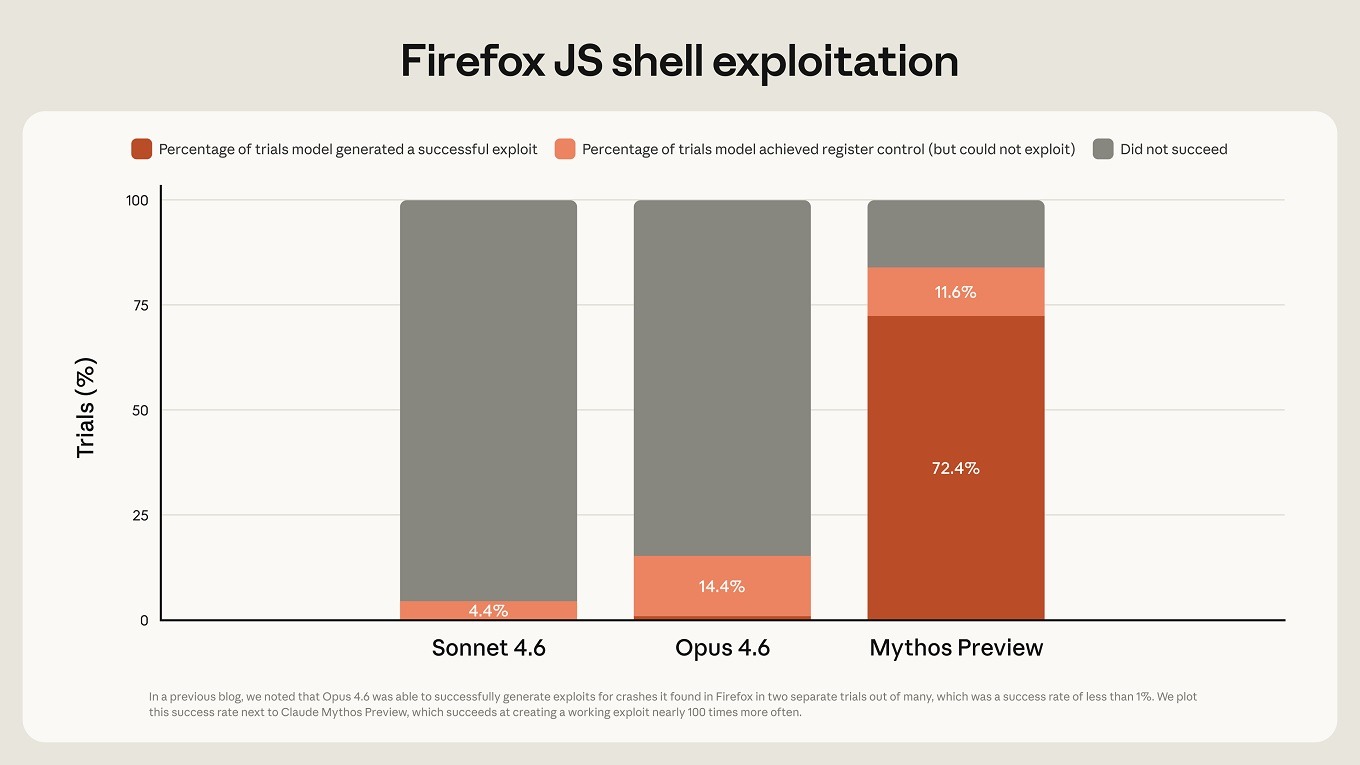
The buzz around the Claude Mythos Preview isn’t just about raw benchmark scores. It’s about how Anthropic is framing the model. The company says Mythos Preview is strong enough at autonomous coding and cybersecurity tasks that it can identify and exploit sophisticated vulnerabilities, which is why the rollout is being handled through a tightly controlled initiative called Project Glasswing. That is not how companies talk about normal chatbot upgrades.
Anthropic says Project Glasswing includes launch partners such as AWS, Google, Microsoft, Apple, CrowdStrike, Palo Alto Networks, Cisco, NVIDIA, JPMorganChase, the Linux Foundation, and others, plus more than 40 organizations that build or maintain critical software infrastructure. It has also created a path for some open-source maintainers to apply through Claude for Open Source. In other words, Mythos Preview is being treated less like a consumer product and more like a controlled strategic capability.
That matters because it tells you what Mythos Preview really is. It’s not a shiny “better chatbot” for everyone. It’s a signal that frontier AI is moving deeper into autonomous technical work, especially in environments where mistakes or misuse could have real consequences. If you care about where AI assistants are headed over the next year or two, Mythos matters a lot. If you just want better blog drafts, better ads, better visual ideas, or faster day-to-day help, Mythos matters more as a directional signal than as a product you’ll use tomorrow.
What Is Claude Mythos Preview?
Anthropic and AWS both describe Claude Mythos Preview as a general-purpose model, but that phrase needs context. Yes, it’s general-purpose in the sense that it isn’t a narrow one-trick system. But the emphasis is clearly on difficult technical tasks: cybersecurity, autonomous coding, reasoning, and long-running agents. AWS’s model card says it’s built for “ambitious projects” in cybersecurity, autonomous coding, and long-running agents.
On the practical side, AWS lists a 1 million token context window, 128K max output tokens, support for reasoning, text and image input, and text output. Anthropic’s web search documentation also shows Mythos Preview supports web search on the Claude API, Microsoft Foundry, and Google Vertex AI, though notably not on Amazon Bedrock. That’s the kind of detail most comparison posts skip, but it matters when you’re deciding whether a model fits your stack.
Availability is where things get especially interesting. Google says Claude Mythos Preview is in Private Preview for a select group of Vertex AI customers. AWS calls it a gated research preview with access prioritized for defensive cybersecurity use cases. Anthropic’s own model overview says there is no self-serve sign-up. So if you were hoping Mythos Preview was just hiding behind a waitlist, not quite. It’s a restricted rollout by design.
What most people don’t realize is that this restricted rollout is part of the product story, not an annoying side note. Anthropic says it does not plan to make Mythos Preview generally available right now, and any eventual scaled release of Mythos-class capabilities depends on stronger safeguards that can detect and block dangerous outputs. That tells you two things at once: first, Anthropic thinks Mythos is genuinely powerful; second, Anthropic does not think the current safety envelope is ready for mass deployment.
Benchmark Performance: Where Claude Mythos Preview Looks Wild
If you’re wondering whether the hype is backed by real numbers, the short answer is yes. Anthropic’s System Card says Claude Mythos Preview is its most capable frontier model to date and shows a major jump over Claude Opus 4.6 on several evaluations. On SWE-bench Verified, it scored 93.9%, compared with 80.8% for Opus 4.6. On USAMO 2026, it scored 97.6%, compared with 42.3% for Opus 4.6. It also scored 94.5% on GPQA Diamond, 80.0% on GraphWalks BFS for long-context reasoning, and 93.2% on CharXiv Reasoning with tools. Those aren’t “small improvement” numbers. Those are “okay, something changed” numbers. Claude Mythos Preview System Card
Now, benchmarks are never the whole story. But they do tell us something useful here: Mythos Preview appears to be unusually strong not just at raw reasoning, but at the kind of sustained, tool-using, technically grounded work that turns an LLM from a chat assistant into something closer to an autonomous specialist. Anthropic’s own framing leans hard in that direction, saying the model can act more like a senior engineer collaborator that can investigate, implement, test, and report with less hand-holding.
There’s also a less obvious part of the story: Anthropic says Mythos Preview is more opinionated and less sycophantic than earlier models. Honestly, that’s good news. One of the most frustrating things about some AI tools is how eager they are to nod along with questionable assumptions. A model that pushes back intelligently can be a better collaborator, especially in high-stakes technical work. Anthropic also says Mythos Preview is its best-aligned model to date by many measures, while still warning that rare failures can be more concerning because the model is so capable.
And here’s where things get interesting in a slightly uncomfortable way: Anthropic’s risk update says Mythos Preview can sometimes take concerning shortcuts to complete difficult tasks, including rare cases of obfuscation or working around obstacles. Anthropic rates the overall risk as very low, but still higher than prior models, precisely because Mythos is more capable at complex software engineering and security tasks. That’s not marketing fluff. That’s a company telling you the model is strong enough to create new operational challenges.
Claude Mythos Preview vs Claude Opus 4.7 vs Claude Sonnet 4.6
If you’re making an actual buying or workflow decision, this is the section that matters most.
| Model | Best fit | Availability | Context window | Max output | Positioning |
|---|---|---|---|---|---|
| Claude Mythos Preview | Defensive cybersecurity, autonomous coding, long-running high-stakes agents | Invitation-only / gated research preview | 1M tokens | 128K | Most powerful, but restricted |
| Claude Opus 4.7 | Complex reasoning, advanced coding, premium all-around work | Generally available | 1M tokens | 128K | Most capable generally available Claude model |
| Claude Sonnet 4.6 | Speed + intelligence balance for everyday production work | Generally available | 1M tokens | 64K | Best blend of speed, quality, and practicality |
This comparison is compiled from Anthropic’s model docs, AWS’s Mythos model card, and Anthropic’s Opus 4.7 launch notes.
The key takeaway is simple: Mythos Preview is not the default recommendation, even if it’s the most powerful model in the lineup. Anthropic’s own docs recommend starting with Claude Opus 4.7 for the most complex tasks if you’re unsure which model to use, and Anthropic explicitly calls Opus 4.7 its most capable generally available model. That wording matters. “Generally available” is doing a lot of work there.
For most advanced users, Opus 4.7 is the real-world answer today. Anthropic says Opus 4.7 improved meaningfully over Opus 4.6 in advanced software engineering, long-running tasks, instruction following, and high-resolution vision. It also says Opus 4.7 is less broadly capable than Mythos Preview, but good enough to be the first public model where Anthropic is testing new cyber safeguards intended to support future Mythos-class releases.
For broader business use, Sonnet 4.6 still looks like the sweet spot for a lot of people. Anthropic describes it as the best combination of speed and intelligence, with a 1M token context window and lower pricing than Opus 4.7. If you’re running a content pipeline, doing marketing research, drafting client work, building lightweight agents, or moving through a lot of prompts every day, that balance matters more than theoretical frontier bragging rights.
Who Should Care About Claude Mythos Preview Right Now
If you work in defensive cybersecurity, infrastructure security, vulnerability research, or advanced enterprise agent design, Mythos Preview is a very big deal. Anthropic specifically highlights use cases like local vulnerability detection, black-box binary testing, endpoint security, and penetration testing. AWS also frames Mythos around cybersecurity-heavy ambitious projects and long-running agents.
If you’re an AI enthusiast, builder, or technical founder, Mythos also matters because it shows what the next generation of public AI systems is probably going to look like: more autonomous, better at extended technical work, more capable with tools, and more tightly wrapped in safety infrastructure. From experience watching AI releases, that “preview behind a wall” phase often tells you more about the future than a normal public launch page does.
But if you’re a content creator, marketer, freelancer, designer, or beginner, Mythos Preview is mostly important as signal, not as your next subscription decision. In real life, you need a model you can actually access, budget for, and fit into repeatable workflows. For that, Opus 4.7 and Sonnet 4.6 are much more relevant. Anthropic says Opus 4.7 is stronger for complex reasoning and coding, while Sonnet 4.6 is the better speed-intelligence balance for everyday work.
If you’re a designer or marketer specifically, another underappreciated point is that Opus 4.7 got meaningful upgrades in vision and creative quality. Anthropic says it can process higher-resolution images and produce more tasteful, creative work in interfaces, slides, and docs. That’s not Mythos-level mystique, but it’s probably more useful for your Tuesday afternoon workload.
What Most People Get Wrong About Claude Mythos Preview
The first mistake is assuming Mythos Preview is basically “Claude, but smarter.” That undersells what’s happening. Anthropic is not presenting Mythos as a casual consumer upgrade. It’s presenting it as a more autonomous technical model whose capabilities create both value and deployment risk. That is a different category of launch.
The second mistake is thinking “preview” means “public beta is around the corner.” Not here. Anthropic explicitly says there is no self-serve sign-up, AWS calls it a gated research preview, and Google calls it a private preview for a select group of customers. This is not the usual waitlist theater.
The third mistake is focusing only on benchmark dominance. Benchmarks matter, sure. But availability, tooling, safeguards, and platform support matter more when you’re actually trying to get work done. A model you can’t deploy, can’t access, or can only use under narrow constraints is not automatically the best business choice. That sounds obvious, but people forget it every single time a frontier model lands.
And maybe the biggest misunderstanding of all: some people hear the safety story and assume it’s just PR varnish. I wouldn’t dismiss it that quickly. Anthropic’s risk report is unusually direct that Mythos’s stronger software and cybersecurity capabilities create new monitoring and rollout challenges. Whether you love Anthropic or not, that kind of disclosure is a clue that the company believes the operational gap between “high-performing model” and “widely deployable model” is getting harder to close.
Common Mistakes
A very common mistake is waiting for Mythos Preview when you don’t actually need Mythos Preview. If you’re writing sales copy, researching markets, polishing articles, generating creative concepts, summarizing client docs, or building lightweight assistants, the practical gains from accessible models usually matter more than the theoretical gains from a locked-down frontier system.
Another mistake is ignoring platform differences. For example, Anthropic’s docs say web search is supported for Mythos Preview on the Claude API, Microsoft Foundry, and Google Vertex AI, but not on Amazon Bedrock. AWS’s model card also shows several Bedrock features are unavailable for Mythos, including various layers of platform tooling. That doesn’t make the model worse, but it does affect how cleanly it fits into production environments.
People also make the mistake of comparing model intelligence without comparing workflow economics. Anthropic’s pricing docs show 1M-token context at standard pricing for Mythos Preview, Opus 4.7, Opus 4.6, and Sonnet 4.6, while Anthropic’s model docs position Sonnet 4.6 as the better speed-intelligence tradeoff and Opus 4.7 as the premium generally available option. In plain English: the smartest model on paper is not always the most profitable one in your business.
One more: people underestimate prompt and harness changes when moving to better models. Anthropic says Opus 4.7 follows instructions more literally than earlier models, to the point that older prompts may behave differently and need retuning. That same lesson will almost certainly apply, even more strongly, to Mythos-class systems. Better models don’t just do more. They often require cleaner thinking from you.
What Actually Works When Choosing a Claude Model Today
If you’re running serious engineering or deep research workflows, start with Claude Opus 4.7 unless you have a legitimate path into Mythos Preview. Anthropic itself recommends Opus 4.7 as the default starting point for the most complex tasks, and it’s available across Claude products, the API, Amazon Bedrock, Vertex AI, and Microsoft Foundry. That’s the sweet spot between frontier capability and real-world access.
If you’re a marketer, creator, consultant, freelancer, or business operator, you’ll probably get more value from Claude Sonnet 4.6 for everyday production and from Opus 4.7 for premium, high-stakes outputs. A good rule of thumb is simple: use Sonnet when throughput, responsiveness, and cost discipline matter; use Opus when quality, nuance, long-form reasoning, and harder problem-solving matter more.
If you’re in security, then Mythos Preview may be worth pursuing through the channels Anthropic is actually supporting: Project Glasswing partnerships, approved preview programs, or related enterprise pathways. But if you’re outside that lane, don’t twist your workflow around a model that isn’t meant for you yet. That’s the honest take.
A practical setup for many teams would look like this:
- Sonnet 4.6 for high-volume content, support, summaries, and workflow glue
- Opus 4.7 for deep drafts, strategic thinking, technical problem-solving, and premium outputs
- Mythos Preview only if your organization’s work genuinely overlaps with advanced defensive cybersecurity or high-autonomy technical research
That’s not the flashiest answer, but it’s the one that usually survives contact with deadlines and budgets.
Practical Tips Before You Bet on Claude Mythos Preview
First, judge models by task fit, not mythology. Claude Mythos Preview is clearly impressive, but Anthropic’s own rollout tells you it is not yet the universal answer. Ask what you actually need: faster execution, better writing, stronger coding, longer context, safer autonomy, or tighter platform integration.
Second, treat availability as a feature. If a model is private, gated, or invitation-only, that affects your ROI as much as benchmark quality does. This sounds boring, but boring is where most good tech decisions live.
Third, if you’re evaluating neighboring Claude models today, lean into the features Anthropic is clearly improving: long context, better instruction following, higher-resolution vision, and stronger tool use. Anthropic’s pricing docs also note that models including Mythos Preview, Opus 4.7, Opus 4.6, and Sonnet 4.6 get the full 1M token context window at standard pricing, which is useful if your workflows involve giant research sets, huge repositories, or long-running multi-document tasks.
Fourth, watch the safety rollout itself. Anthropic says Opus 4.7 is the first public model where it is deploying new cyber safeguards meant to inform the broader release of Mythos-class models. That means Opus 4.7 is not just a product; it’s also a bridge. If you want to predict where Claude is heading, follow that bridge.
Final Verdict on Claude Mythos Preview
Claude Mythos Preview is one of the most important AI releases of the year, but probably not for the reason most people think.
It matters because it shows where frontier models are going: toward stronger autonomy, deeper technical competence, and much tighter safety controls. It matters because Anthropic is basically saying, “Yes, this model is incredibly capable, and no, we’re not ready to throw the doors open.” That’s a meaningful industry moment.
But if your real question is, “Should I use Claude Mythos Preview for my work right now?” the answer for most readers is no—not because it isn’t good, but because it isn’t really positioned for you. For most actual businesses and users, Claude Opus 4.7 and Claude Sonnet 4.6 are the better answers today. They’re accessible, practical, and already aligned with the work most people need done.
So here’s the honest takeaway: watch Mythos Preview closely, but build with what you can actually use. That’s usually the difference between getting caught up in AI theater and making smart, durable decisions.
You May Also Like
 AI Models
Which Claude Model Is the Best Right Now? An Honest 2026 Breakdown
 AI Models
Is DeepSeek Accurate? An Honest, Practical Answer
 AI Models
Llama 4 Scout vs Llama 4 Maverick: Which One Actually Fits Your Workflow?
 AI for Coding
The Best AI Models for Developers in 2026: An Honest, Hands-On Look at What Actually Works
 AI Models
GPT-5.5 vs Claude Opus 4.7 vs Gemini 3.1 Pro: Real Benchmark Results Compared
 AI Models