
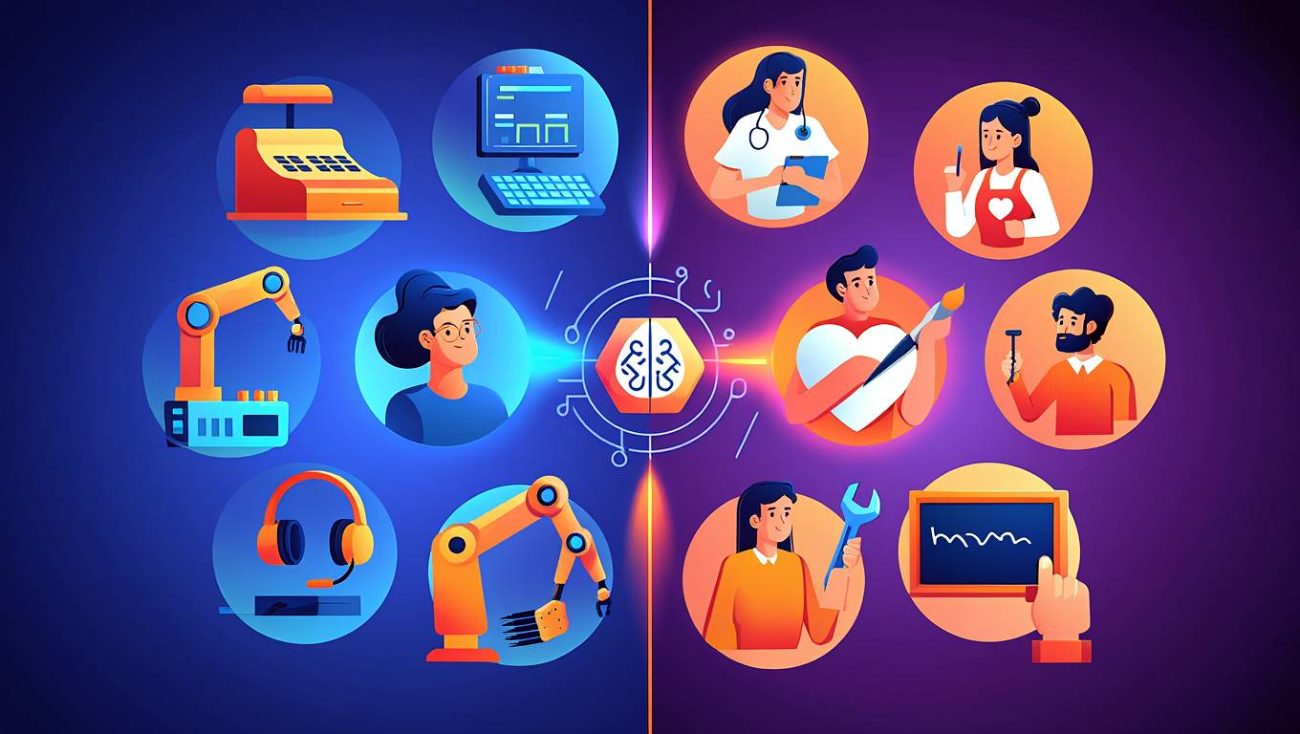
If you’re in school, job hunting, or just a little uneasy every time someone says “AI is coming for everyone’s jobs,” you’re not overreacting. A lot of people feel that pressure right now.
You hear that ChatGPT can write. GPT models can code. AI tools can answer customer questions, summarize meetings, sort data, and even help with research. Then someone jumps in and says AGI is around the corner and suddenly every career path starts to feel shaky.
Here’s the thing: AI is changing work fast, but it’s not replacing every job in one giant sweep. That’s not how this works in real life. What’s happening instead is more uneven, and honestly, more confusing. AI is replacing certain tasks first. Then it changes what companies hire for. Then it changes which skills matter. And eventually, some roles shrink, some evolve, and some become much more valuable.
That’s why the real question isn’t just, “Will AI take jobs?” Of course it will. It already is. The better question is: what jobs will AI replace and not replace, and what does that mean for your own career?
That’s what we’re getting into here. No dramatic robot-apocalypse nonsense. No fake “don’t worry, everything will be fine” fluff either. Just a realistic, useful breakdown of the jobs most exposed to AI job displacement, the more resilient jobs, and how to think about future-proof careers in a way that actually helps.
The truth most people miss about AI and jobs
A lot of the conversation around AI is weirdly simplistic.
One side says AI will replace almost everyone. The other side says it’s just another tool and nothing major will change. Both takes miss the point.
What most people don’t realize is that AI usually doesn’t wipe out a whole profession overnight. It chips away at the parts of the job that are repetitive, digital, and easy to standardize. That’s a big reason the current wave of AI automation jobs is hitting some white-collar roles faster than expected.
Recent labor-market research points in the same direction. Large employer surveys show that businesses expect AI and automation to eliminate millions of roles over the next several years while also creating new ones. The big shift isn’t just job loss. It’s job redesign. Work is being reorganized around what machines do well and what humans still do better.
That sounds abstract, but in practice it’s pretty simple.
If your work mostly involves:
- moving information from one system to another
- answering the same questions over and over
- producing predictable outputs from predictable inputs
- following a repeatable digital workflow
Then yes, AI replacing human jobs is a real risk.
If your work depends more on:
- trust
- judgment
- emotional intelligence
- physical presence
- leadership
- creativity with taste
- messy real-world problem-solving
You’re in a much stronger position.
That’s the pattern behind most occupations at risk from AI and most professions resilient to artificial intelligence. It’s less about the title and more about the task mix.
Jobs AI will replace first
Let’s start with the uncomfortable part.
Some jobs are clearly more exposed than others, and pretending otherwise doesn’t help anyone. The jobs AI will replace first tend to be structured, screen-based, and repetitive. They’re often the kinds of roles companies have wanted to automate for years, but the technology wasn’t quite good enough until now.

Data entry and routine admin work
This is probably the most obvious category.
If a job is mostly about entering information, updating spreadsheets, organizing digital records, routing emails, scheduling meetings, or moving data between platforms, AI and automation tools are already doing a lot of it better, faster, and cheaper.
That doesn’t always mean the role disappears entirely. Sometimes one person stays to supervise the process, review exceptions, or handle the stuff the system can’t figure out. But the pure version of data entry and repetitive admin work is one of the clearest examples of AI job displacement.
It’s not personal. It’s just highly automatable.
Basic customer service
This one is already happening all around you.
If you’ve interacted with a company chat window lately, you’ve probably seen it yourself. A lot of routine customer service has become a mix of chatbots, AI assistants, scripted workflows, and human escalation only when things get messy.
Simple support tasks like:
- checking order status
- resetting passwords
- answering common policy questions
- handling basic account issues
- routing tickets to the right team
Are exactly the kind of work AI handles well.
That means entry-level customer service reps, especially in high-volume support environments, are under real pressure. Not all customer service jobs are disappearing, though. Once a situation involves frustration, confusion, nuance, or a customer who’s about to cancel, a human still matters a lot.
So the safer version of this work is the complicated version, not the scripted version.
Basic content writing
A lot of content on the internet was bland before AI ever showed up. And now that AI can generate product descriptions, category pages, generic blog drafts, short-form captions, ad copy variations, and email templates in seconds, the low end of the content market is getting squeezed hard.
This is one of those areas where people either panic or get defensive. The more accurate answer is somewhere in the middle.
AI is very good at producing content that is:
- formulaic
- informational but shallow
- built from common patterns
- not especially original
- not based on firsthand knowledge
So yes, if someone’s job is basically pumping out interchangeable SEO filler all day, that role is at risk.
But strong writers aren’t valuable because they can type paragraphs. They’re valuable because they can think, notice, interview, structure, argue, edit, and connect with an audience. That’s different. More on that in a minute.
Entry-level coding and repetitive software work
This is where things get a little awkward for people who assumed tech jobs were automatically safe.
AI coding tools can already handle a lot of the grunt work:
- boilerplate code
- test generation
- debugging help
- documentation
- simple front-end tasks
- straightforward CRUD features
So when people ask which jobs will AI take over, some entry-level software tasks absolutely belong in the conversation.
That doesn’t mean software engineering is dead. It means the market is becoming less forgiving for people whose value is limited to basic implementation. If all you can do is build standard features that AI can mostly scaffold for you, you’re more exposed than someone who understands architecture, product thinking, system design, security, or customer problems.
In real life, companies still need engineers. They just may need fewer people doing the most routine parts of the work.
Bookkeeping and repetitive accounting support
Accounting isn’t disappearing, but routine accounting work is changing fast.
Invoice processing, expense categorization, account reconciliation, recurring report creation, and other structured financial tasks are increasingly handled by software with AI layered on top. That makes basic bookkeeping one of the more obvious AI automation jobs.
The human value in finance is moving upward, toward interpretation, advising, risk management, investigation, and business decision support. The lower-level, rule-based processing work is where the pressure is strongest.
Simple research and junior analysis
AI has become surprisingly useful for first-pass research.
Need a summary of a report? A comparison of competitors? A breakdown of trends? A digest of a long document? AI can do that quickly, and in many cases, good enough for an early draft.
That puts pressure on junior roles that are mostly about gathering obvious information rather than making judgment calls about what it means. The analyst who can interpret messy signals, challenge assumptions, and advise on action still matters. The analyst who mainly compiles and reformats information has a weaker moat.
Translation and transcription
This has been happening for a while, but it’s become more obvious lately.
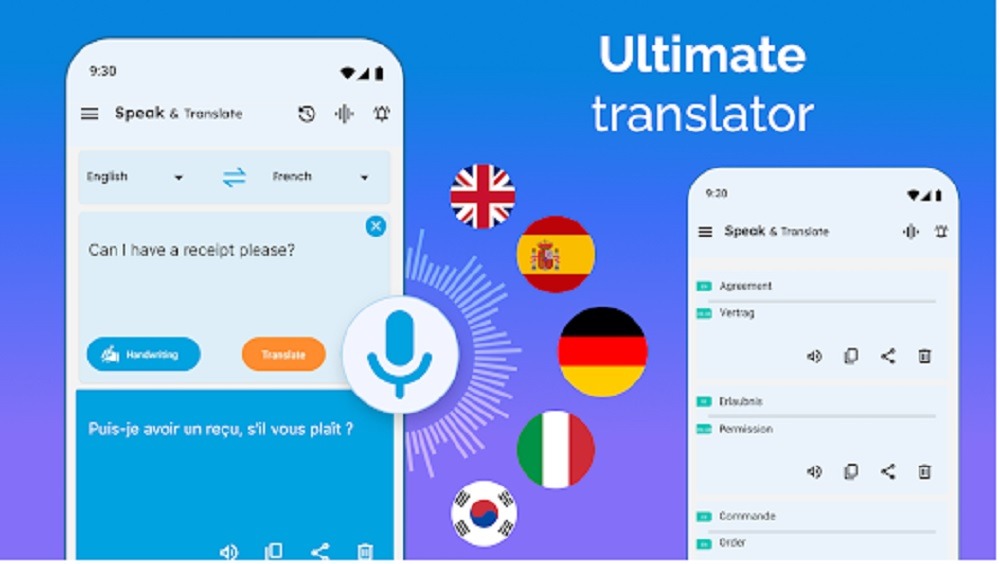
Basic transcription and straightforward translation have become much easier to automate. Human experts are still important when nuance really matters, like legal language, sensitive business communication, literary work, or brand voice. But in lower-cost, speed-focused situations, AI is often “good enough,” and that changes the market.
That’s an uncomfortable pattern you see over and over again in artificial intelligence job automation. Perfect isn’t necessary. Cheap and decent often wins.
Jobs AI will not be easily replaced

Now for the part everyone wants to know.
When people look for jobs that AI will not replace, they usually want certainty. Totally understandable. But “safe” doesn’t mean untouched. Almost every job will change in some way. The real difference is whether AI mainly assists the work or whether it can take over the core value of the work.
That’s where some careers stand out.
Skilled trades
If you want one of the strongest examples of jobs safe from AI, look at the trades.
Electricians, plumbers, HVAC techs, mechanics, welders, carpenters, and similar hands-on roles are much harder to automate than many office jobs. Not because they’re low-tech, but because they happen in unpredictable physical environments.
A house doesn’t care about your software demo. Pipes are hidden. Wiring is messy. Machines break in weird ways. Customers describe problems badly. Real-world troubleshooting requires judgment, movement, dexterity, and adaptation.
AI can help with diagnosis, scheduling, quoting, documentation, and training. But actually doing the work is a different story.
This is one of the big surprises of the current moment: some desk jobs look more exposed than hands-on technical work.
Nurses and frontline healthcare workers
Healthcare is full of tasks AI can support, but support is not the same thing as replacement.
AI can help summarize notes, flag risk patterns, interpret some imaging, assist with triage, and reduce paperwork. All of that matters. But patients are not spreadsheets.
Nurses, caregivers, therapists, rehab professionals, and frontline healthcare workers do things that go way beyond information processing. They handle fear, pain, confusion, family dynamics, urgency, physical care, and moral responsibility. A lot of healthcare work is relational, embodied, and high-stakes.
That makes it one of the clearest areas of work where automation versus human skills in the workforce becomes obvious. The machine can assist. The human is still accountable.
Teachers and educators
People love to talk about AI tutors as if that means teaching is basically solved. It’s not.
Teaching is not just delivering information. It’s reading the room. It’s noticing when a student is confused but too embarrassed to say it. It’s managing attention, behavior, motivation, and trust. It’s knowing when to push, when to slow down, and when a student needs encouragement more than instruction.
Can AI help teachers? Absolutely. It can save time, personalize practice, and support lesson planning. But a great teacher does a lot more than present content.
That’s why education remains one of the most resilient professions against machine learning, especially when the work is in-person, developmental, and deeply human.
Therapists, counselors, and social workers
This one really shouldn’t be controversial.
People don’t seek counseling because they want cleaner sentence prediction. They want to be understood by another person. They want empathy, presence, challenge, accountability, and trust. They want someone who can sit with complexity and pain without reducing it to a pattern.
AI may become a useful support tool in mental health. It can help with journaling, exercises, check-ins, and even early screening. But therapy itself is built around human relationship.
Same for social work. A lot of the work involves judgment, context, ethics, family systems, crisis response, and community realities that don’t fit neatly into a model.
Leadership and management
AI can recommend. It can summarize. It can draft plans. It can even simulate scenarios.
What it can’t do well, at least not in the way organizations actually need, is lead humans through uncertainty. Leadership involves conflict, persuasion, accountability, timing, trust, and responsibility. It involves making calls when the information is incomplete and living with the consequences.
That doesn’t mean every manager is safe. Some layers of middle management may get squeezed if their role is mostly passing information around. But real leadership? Still human territory.
High-level creative work
This is where nuance matters.
AI can absolutely generate creative-looking output. It can mimic tone, remix styles, suggest concepts, and produce endless variations. That will replace some low-level creative production, no question.
But the more a creative role depends on taste, originality, cultural instinct, emotional precision, and point of view, the harder it is to automate well.
There’s a big difference between making content and making something that actually lands.
The internet is about to get even more crowded with average material. That may actually make strong creative work more valuable, not less. People who can bring a real perspective, shape a narrative, and make smart creative choices will still matter.
Complex sales and relationship-driven work
People still buy from people, especially when the stakes are high.
If a sale is simple, low-risk, and transactional, automation can do more of it. But when a deal involves trust, negotiation, long timelines, multiple stakeholders, and real human reassurance, AI is nowhere near replacing the relationship.
That’s why consultative sales, partnership roles, account management, and relationship-heavy business development are more resilient than people expect.
The jobs in the middle
This is where most careers actually live.
A lot of jobs aren’t about to disappear, but they’re definitely changing. Marketing, law, HR, software engineering, finance, design, project management, operations, recruiting, and consulting all fall into this category.
If you work in one of these fields, the issue isn’t usually “AI or no AI.” It’s whether you do the part of the job that’s easy to automate or the part that becomes more valuable when automation enters the picture.
Take marketing. If your role is mostly writing generic copy, scheduling posts, and pulling basic reports, that’s vulnerable. If you understand positioning, audience psychology, creative direction, offer design, and growth strategy, that’s much harder to replace.
Same field. Very different level of risk.
Same with law. Same with software. Same with design.
This is why job titles are becoming less useful as a shortcut. The safer question is: what exactly do you do all day?
What most people get wrong
There are a few really common mistakes in the AI career conversation, and honestly, they cause a lot of unnecessary panic.
They assume AI replaces whole jobs all at once
Usually, it replaces tasks first. Then companies reorganize around that. Then hiring changes. Then, entry-level roles become harder to get. Then the profession feels different from the bottom up.
That’s a more realistic picture than “one day the robots arrive.”
They assume white-collar work is automatically safer
That was a comfortable belief for a long time. It’s less convincing now.
A surprising number of digital office jobs are exposed precisely because they involve text, data, documents, analysis, and repeatable workflows. Meanwhile, a lot of hands-on technical work is harder to automate because the physical world is messy.
That doesn’t mean blue-collar jobs are all safe and white-collar jobs are all doomed. It just means the old assumptions don’t hold as well as they used to.
They confuse “creative” with “protected”
A lot of creative work is repetitive too. If the output is formulaic and the stakes are low, AI can compete with it.
What stays valuable is not just creativity in the abstract. It’s judgment, taste, originality, and understanding of what people actually care about.
They ignore the entry-level problem
This one matters a lot for students and early-career workers.
Even when AI doesn’t fully replace a profession, it can reduce the number of beginner roles because senior workers become more productive with AI tools. That makes the first rung of the ladder harder to reach.
And that may be one of the biggest near-term problems in the labor market: not total replacement, but fewer chances to get started.
Common Mistakes when choosing an AI-safe career
People often respond to uncertainty by looking for a magic list of AI proof occupations. I get it. But that can lead to bad decisions.
Mistake #1: Looking for a permanently safe title
There probably isn’t one.
A better approach is to look for careers where the core value comes from things AI still struggles with: trust, care, accountability, creativity, physical skill, leadership, or judgment under uncertainty.
Mistake #2: Focusing on tools instead of value
Learning AI tools is smart. You should absolutely do that.
But knowing how to use AI is not, by itself, a career moat. If everyone can use the same tools, your edge has to come from something else too. Domain knowledge. Relationships. taste. Technical depth. Decision-making. Something real.
Mistake #3: Assuming college-degree jobs are safer than hands-on work
That’s not always true anymore.
In some cases, a skilled trade or applied healthcare role may be more resilient than a generic office job that looks “professional” on paper.
Mistake #4: Underestimating human skills because they sound soft
This is a big one.
Communication, empathy, leadership, teaching, negotiation, and emotional regulation get labeled as soft skills, which makes them sound optional. They’re not optional. In an AI-heavy economy, they may become even more valuable because they’re harder to automate.
What actually works if you want a future-proof career
This is the practical part.
If you want to build one of the more future-proof careers against artificial intelligence, the goal is not to avoid technology. The goal is to become difficult to replace.
1. Get good at working with AI, not against it
People who refuse AI completely are probably not positioning themselves well. In a lot of fields, AI will become part of the normal workflow. The professionals who win will usually be the ones who know how to use it without depending on it blindly.
Think of it this way: AI can speed up the first draft, but you still need to know what a good final answer looks like.
2. Build skills AI can’t easily fake
These include:
- trust-building
- clear communication
- leadership
- strategic thinking
- original creative judgment
- manual dexterity
- decision-making under pressure
- cross-functional problem-solving
You don’t need all of them. But you need some kind of moat.
3. Choose work that involves stakes, not just output
The safest work is often the kind where someone has to be accountable.
If a mistake costs money, harms a patient, ruins a client relationship, damages trust, or creates legal risk, companies usually want a human in the loop. That’s a useful clue when you’re evaluating careers.
4. Go deeper, not broader
The “I can do a little bit of everything” profile is getting weaker in some digital fields. AI can cover a lot of shallow generalist work.
Depth is becoming more valuable. Real expertise. Real craft. Real judgment.
5. Don’t just ask whether AI can do the task
Ask whether people will trust AI alone to do the task.
That’s a different question, and often a better one.
A machine might be capable of something in theory, but if customers, employers, patients, or regulators still want a human accountable for the outcome, the job remains more resilient.
A realistic list: jobs AI will replace vs jobs AI will not replace

Here’s the cleaner version.
Jobs AI will replace first or reduce heavily
- data entry clerks
- routine administrative assistants
- basic customer support reps
- telemarketers
- transcriptionists
- basic translators
- simple bookkeeping clerks
- generic content writers
- junior research assistants doing mostly information gathering
- document processing roles with repetitive workflows
- entry-level coding roles focused on routine implementation
Jobs AI will not replace easily
- electricians
- plumbers
- HVAC technicians
- mechanics
- nurses
- physical therapists
- caregivers
- teachers
- therapists and counselors
- social workers
- emergency responders
- skilled construction workers
- enterprise sales professionals
- experienced managers
- creative directors
- field service technicians
If you look at those lists side by side, the pattern becomes pretty obvious. The safer jobs tend to involve people, pressure, physical reality, and unpredictable situations.
If you’re a student or early-career professional, here’s the smart way to think about it
Don’t try to find a career that never changes. That’s not realistic.
Instead, look for roles where at least some of your value comes from things that are hard to automate:
- direct human interaction
- high accountability
- real-world execution
- creative judgment
- technical depth
- relationship-building
- physical skill
- decision-making in messy situations
And if you’re interested in a field that’s clearly being changed by AI, that doesn’t mean you should avoid it. It just means you should enter it differently.
If you want to go into writing, be the person who can report, think, edit, and tell a strong story.
If you want to go into software, be the person who understands systems and users, not just syntax.
If you want to work in business, be the person who can communicate, sell, lead, and make decisions when the answer isn’t obvious.
That’s where the durable value is.
Final thoughts
So, what jobs will AI replace and not replace?
AI is most likely to take over work that is repetitive, structured, digital, and easy to standardize. That includes data entry, simple admin work, routine customer support, basic content creation, straightforward analysis, transcription, bookkeeping, and some entry-level coding tasks.
AI is much less likely to replace work built around trust, care, teaching, leadership, hands-on skill, emotional intelligence, and judgment in messy real-world situations. That includes skilled trades, healthcare, education, therapy, relationship-based sales, and strong strategic or creative roles.
The people who do best in the next few years probably won’t be the ones pretending AI isn’t a big deal. And they won’t be the ones panicking either.
They’ll be the ones who adapt early, build real skills, and make themselves useful in ways AI can support but not easily copy.
That’s the real career strategy now. Not “hide from AI.”
Build a kind of value that still matters when everyone has access to the same tools.
You May Also Like
 AI Tutorials
How to Use Claude Opus 4.7 for Free
 AI Tutorials
Character AI Review: A Complete, Honest Guide for 2026
 AI Tutorials
Classplus Login: How to Sign In as a Student or Teacher
 AI Tutorials
Prolific Login: How to Access Your Account and Start Earning
 AI Tutorials
15 Fun and Creative Ways to Use AI at Work
 AI Tutorials