

If you are trying to choose between DeepSeek and ChatGPT, you probably want one thing first. You want a clear answer that saves you time. DeepSeek usually wins on cost and open model access, while ChatGPT usually wins on product depth and daily workflow.
That is the fast version. But your real choice depends on how you work.
If you build apps, run prompts at scale, or care about API bills, DeepSeek can look very attractive. If you write, research, upload files, speak with AI, and move between different tasks all day, ChatGPT often feels easier to live with.
I built this guide by checking official pricing pages, privacy policies, product docs, and published model details updated through April 2026. I am not repeating generic talking points. I am trying to give you a useful decision guide you can actually act on.
If you want a practical, plain-English comparison, this is for you.
What is the real difference between DeepSeek and ChatGPT?
The real difference is that DeepSeek feels more like a value-driven model platform, while ChatGPT feels more like a complete AI workspace.
That difference matters more than most people think.
When people search for “DeepSeek vs ChatGPT,” they often act like these tools do the exact same job. They do not.
DeepSeek is known for strong reasoning models, very low API pricing, and public model releases. It speaks more directly to developers, builders, and cost-sensitive teams.
ChatGPT is known for being easier to use as a full product. It brings together chatting, file uploads, data analysis, web search, voice, memory, image work, and custom assistants in one place.
So you are not just comparing answer quality.
You are comparing:
- The model itself. This affects reasoning, coding, math, accuracy, and output style.
- The product layer. This affects how easy the tool feels in your daily work.
- The pricing model. This affects whether the tool makes financial sense for personal or business use.
- The privacy setup. This affects risk, trust, and long-term fit.
That is why two smart people can test both tools and come away with different answers.
One may care about cost.
Another may care about convenience.
Another may care about privacy.
Another may care about open-access models.
All of them can be right.
Why do so many comparisons miss the point?
Many comparisons miss the point because they compare hype, not real use.
This happens all the time.
One post says DeepSeek is “better” because it is cheaper.
Another says ChatGPT is “better” because it has more features.
Both statements are incomplete.
A better question is this: What problem are you trying to solve with AI this week?
If you are building a coding assistant, cheap output and strong reasoning may matter most.
If you are reviewing PDFs, outlining articles, checking data, and doing client work, the better workflow may matter more.
So I think the useful way to compare these tools is not with fan language. It is with real work questions.
That is how I structured the rest of this guide.
Which one costs less when you actually use it?
DeepSeek costs much less on the API side, while ChatGPT uses a more familiar subscription model for end users.
This is the biggest reason DeepSeek got so much attention so quickly.
DeepSeek’s official API pricing is far lower than OpenAI’s official pricing for ChatGPT-related API models. On paper, the gap is dramatic.
Here is the simple API comparison.
| API Pricing Metric | DeepSeek | ChatGPT Model Pricing |
|---|---|---|
| Cached input | $0.028 per 1M tokens | $0.175 per 1M tokens |
| Standard input | $0.28 per 1M tokens | $1.75 per 1M tokens |
| Output | $0.42 per 1M tokens | $14 per 1M tokens |
That means DeepSeek is roughly 6.25 times cheaper for standard input and roughly 33 times cheaper for output, based on official posted rates reviewed in April 2026.
That is not a rounding error.
That is a strategy difference.
Why does output price matter so much?
Output price matters because useful AI often generates long answers, code, summaries, and reasoning chains.
A lot of buyers only look at the input price first.
That is a mistake.
If your app asks users to generate code, explain documents, summarize calls, write long drafts, or solve multi-step tasks, output tokens can dominate your bill.
So when you see DeepSeek’s output price versus OpenAI’s output price, you are not looking at a minor line item. You are looking at something that can change your monthly budget in a serious way.
What does ChatGPT cost if you use the app?
ChatGPT is easier to understand on the consumer side because its plans are packaged by month.
For many people, that matters more than token math.
ChatGPT offers a free version, a Plus plan at $20 per month, and a Pro plan at $200 per month. Plus is aimed at regular users who want more access, better limits, advanced tools, and a smoother experience. Pro is built for heavier use and premium access.
That creates a different buying experience.
DeepSeek pulls you toward value and scale.
ChatGPT pulls you toward convenience and a predictable monthly bill.
If you are not a developer, ChatGPT’s pricing may feel simpler.
If you are building products, DeepSeek’s pricing may feel much smarter.
Which tool gives you more for your money?
DeepSeek gives you more raw model usage for your money, while ChatGPT gives you more product features for your money.
This is where many people get stuck.
They ask, “Which one is the better deal?”
The answer depends on what you are buying.
If you are buying tokens, DeepSeek looks like a bargain.
If you are buying workflow, ChatGPT often looks stronger.
Think about it like this.
DeepSeek is often the better deal if you want:
- Lower inference cost for apps, agents, and internal tools.
- More experimentation because cheaper usage means you can test more prompts.
- Better cost control for startups and lean technical teams.
- Open model access for research or deployment flexibility.
ChatGPT is often the better deal if you want:
- One app for many tasks instead of several separate tools.
- Less setup and faster time to value.
- Built-in research, files, voice, and image tools in one place.
- Better ease for non-technical users across a full workday.
So the word “value” changes meaning depending on what you buy.
That is the truth most comparison posts skip.
What do you actually get inside ChatGPT that feels useful day to day?
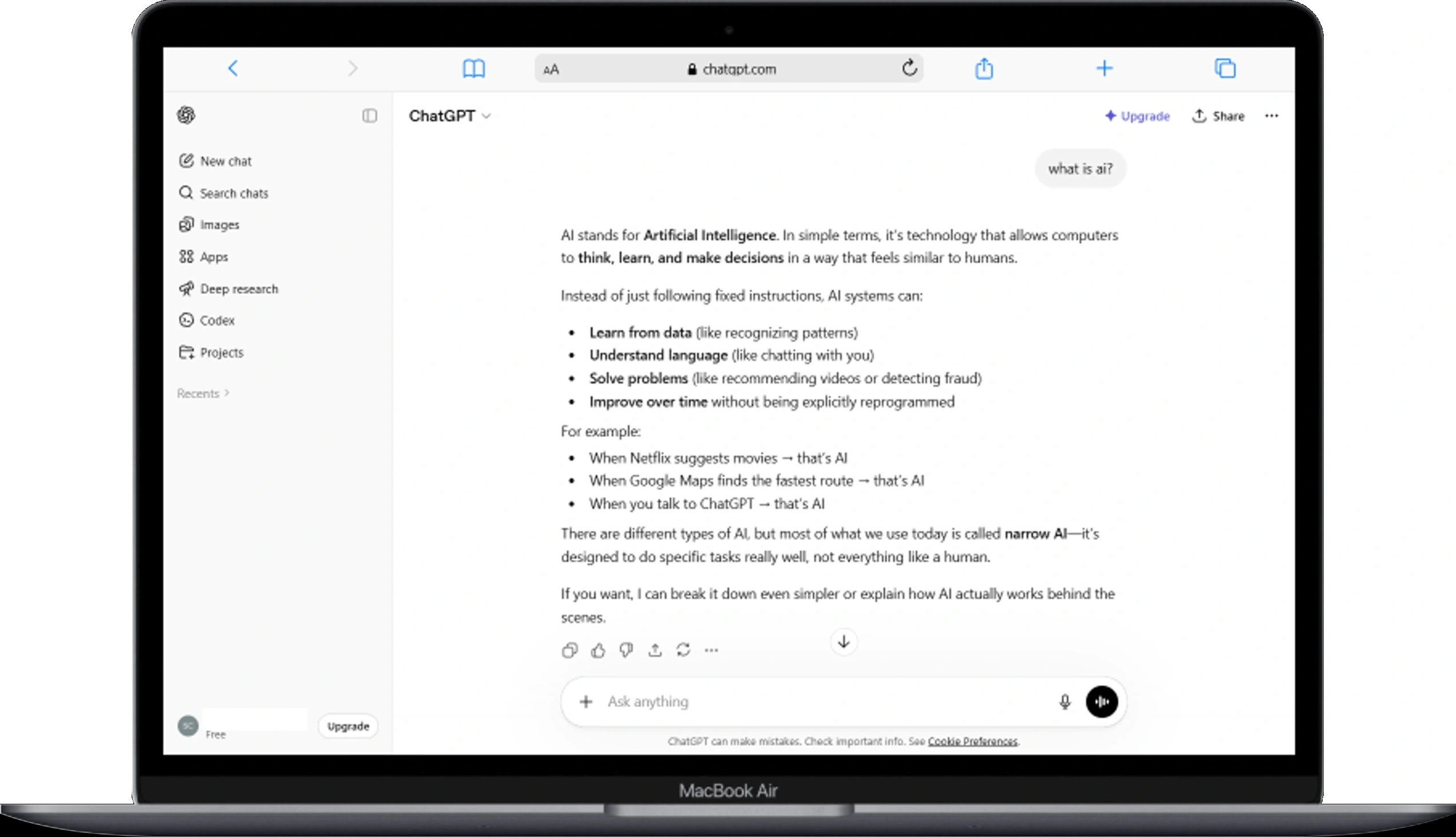
ChatGPT feels useful day to day because it wraps AI into a broader work experience, not just a chat box.
This is the biggest reason many users stay with it.
In official product documentation, ChatGPT supports web search, deep research, image input, image generation, file uploads, data analysis, voice mode, memory, projects, scheduled tasks for some users, and custom GPTs.
That list is important. But what matters more is how it changes your work.
It means you can stay in one place.
You can ask a question, upload a file, switch to deeper research, turn that into a draft, revise it, and then keep going without jumping across tools.
That is a real advantage.
Why does that workflow matter so much?
Workflow matters because small friction adds up over a week.
If your work involves mixed tasks, switching tools drains energy.
You might start with a question.
Then you need a file review.
Then you need a table.
Then you want a quick chart.
Then you need a cleaner draft.
Then you want a voice explanation while walking.
ChatGPT is built for that kind of messy real life.
It reduces tool switching.
It reduces setup time.
It reduces the number of moments where you stop and think, “Wait, where do I do this part?”
That is why people often describe ChatGPT as easier, even when another model is cheaper.
Ease is not fluff.
Ease saves hours.
What does DeepSeek do especially well that keeps technical users interested?
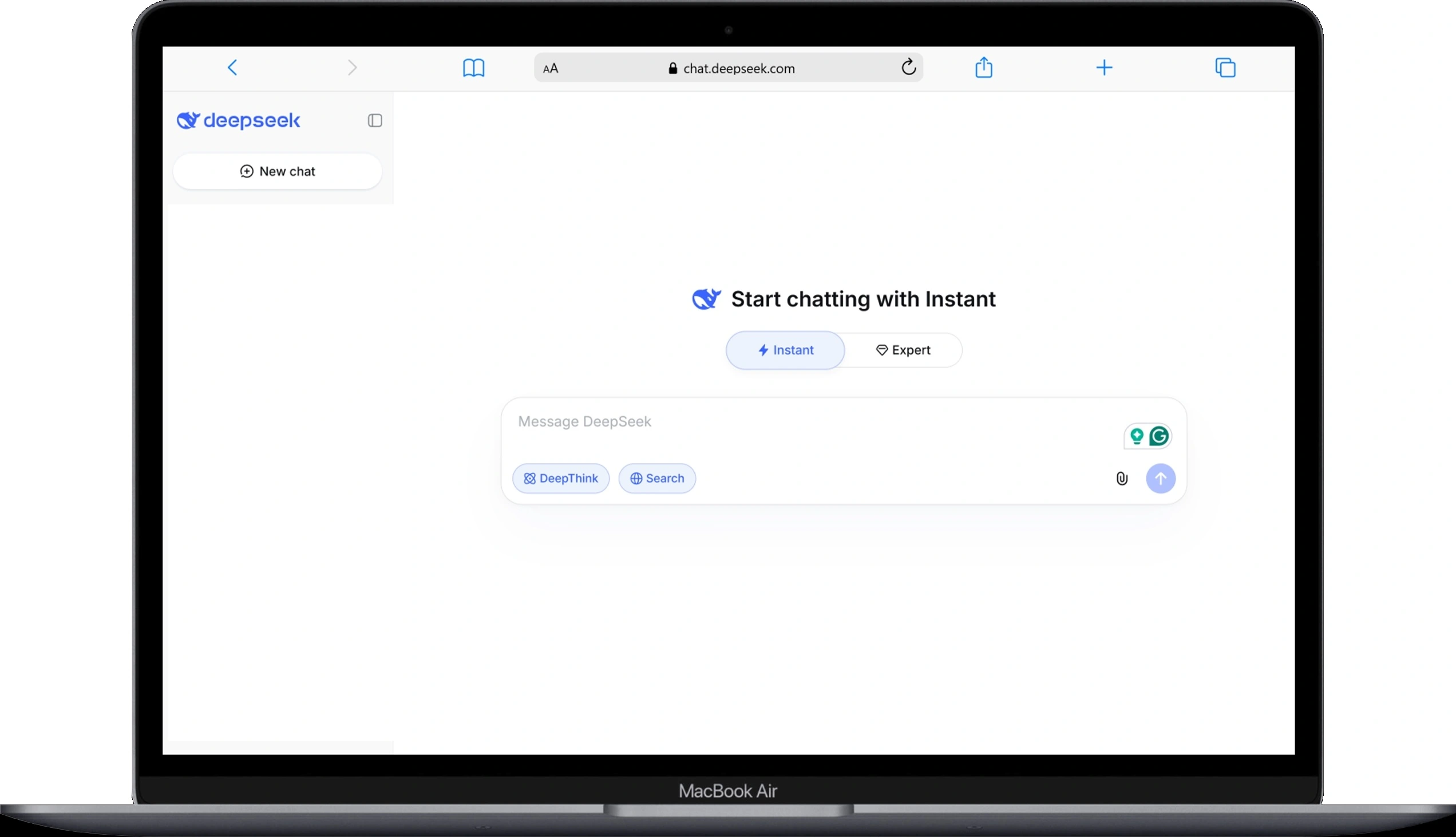
DeepSeek does especially well when you want strong reasoning at a very low operating cost.
This is where DeepSeek becomes more than a budget option.
DeepSeek-R1 posted impressive benchmark scores in public materials. The model showed strong performance in math, reasoning, coding, and software-related evaluation. That is why developers took it seriously.
Here is a snapshot of reported DeepSeek-R1 benchmark results widely cited from the model’s published materials.
| Benchmark | DeepSeek-R1 Result | Why It Matters |
|---|---|---|
| AIME 2024 | 79.8% | Shows strong competition-style math reasoning |
| MATH-500 | 97.3% | Shows strong structured mathematical problem solving |
| SWE-bench Verified | 49.2% | Shows practical software issue resolution ability |
| LiveCodeBench | 65.9% | Shows real coding task strength |
Those are not toy numbers.
They show that DeepSeek is not interesting only because it is cheap.
It is interesting because it combines capable reasoning with low price.
That is a powerful mix.
Why do benchmark numbers matter, but not tell the whole story?
Benchmark numbers matter because they show technical strength, but they do not fully predict your daily experience.
This is important.
A model can score well on reasoning benchmarks and still feel weaker in day-to-day tasks like file handling, tone control, workflow support, or multi-step business work.
That is why you should never buy based only on leaderboard energy.
Use benchmarks as one signal.
Then test your own tasks.
That is the smarter move.
How do DeepSeek and ChatGPT feel for coding work?
DeepSeek often looks better on cost-to-code ratio, while ChatGPT often feels better as a coding environment for mixed workflows.
If you write code every day, this section matters a lot.
DeepSeek has three big advantages for developers.
- It is cheaper to run. That means more tests, more retries, and more room to build without burning budget.
- It offers strong reasoning performance. That matters for debugging, logic, and step-by-step code work.
- It uses an OpenAI-compatible API format. That lowers migration friction for some teams.
ChatGPT has a different kind of coding appeal.
It is not just about the model.
It is about the environment around the model.
You can combine code help with files, explanations, research, notes, and data work in the same session. For solo workers and product teams, that can make the work feel smoother.
Which one is better for pure coding output?
DeepSeek can be the smarter pick for pure coding output if your priority is performance per dollar.
If you are running many coding prompts at scale, DeepSeek’s price advantage is hard to ignore.
That is especially true for:
- internal engineering tools
- code review helpers
- automated fix suggestions
- large prompt testing
- multi-agent experiments
Which one is better for developers who also research and write?
ChatGPT is often better if your coding work combine with analysis, writing, research, and file tasks.
A real workday is not always pure coding.
Sometimes you need to:
- Read product notes
- summarize bug reports
- analyze a CSV
- draft release notes
- review a document
- brainstorm architecture options
That is where ChatGPT can feel more complete.
So here is the honest answer.
If your coding work is high volume and cost sensitive, DeepSeek deserves the first serious test.
If your coding work is mixed with knowledge work, ChatGPT may feel better even if it costs more.
How do they compare for research and information work?
ChatGPT is usually stronger for broad research workflows, while DeepSeek is stronger if you care more about reasoning value than research tooling.
This is a very important split.
Research is not just “answer my question.”
Good research work often involves:
- finding current information
- reading across sources
- organizing notes
- comparing claims
- turning findings into a useful output
ChatGPT is better positioned for that kind of work because it officially includes search and deep research tools. It also supports file uploads and data analysis, which helps when your research includes reports, spreadsheets, slide decks, or internal material.
DeepSeek can still help with analysis, reasoning, and synthesis. But based on official public product messaging, the wider research workflow is more clearly built out in ChatGPT.
What does that mean for students, marketers, and analysts?
It means ChatGPT is often easier for people who move from question to source review to final output in one session.
If you are a student, you may start with a question, upload a paper, ask for a summary, compare arguments, and then turn the result into notes.
If you are a marketer, you may need research, positioning, messaging, and quick editing in one place.
If you are an analyst, you may need file review, synthesis, and structured output.
That is the kind of work ChatGPT handles well.
DeepSeek may still be excellent in the reasoning step.
But ChatGPT is stronger in the full path around that step.
Why does open model access matter more than people think?
Open model access matters because it gives you more control, more flexibility, and sometimes more trust in your technical stack.
This is one of DeepSeek’s biggest strategic advantages.
Public information around DeepSeek-R1 says the company released DeepSeek-R1, DeepSeek-R1-Zero, and distilled variants in sizes like 1.5B, 7B, 8B, 14B, 32B, and 70B under MIT terms that support commercial use.
That matters for serious teams.
Here is why.
- You can inspect and test more deeply. Public releases help researchers and engineers study behavior more closely.
- You can think beyond hosted access. Open access creates options that fully closed products do not offer.
- You can align deployment with your own strategy. Some teams value that independence a lot.
ChatGPT is a hosted product experience.
DeepSeek is closer to a model ecosystem.
That difference may not matter to casual users.
It matters a lot to technical buyers.
How do privacy and data controls change the decision?
Privacy and data controls can change the decision more than model quality for many teams.
You should not treat this as a small legal footnote.
According to official policy materials, DeepSeek collects account data, prompts, files, chat history, device and network information, usage data, approximate location data, cookies, payment-related data, and some information from other sources. The same policy says personal data is collected, processed, and stored in the People’s Republic of China.
The policy also says DeepSeek uses personal data to operate services, improve services and models, communicate with users, maintain safety and stability, and comply with legal obligations. It states that it does not engage in targeted advertising or sell personal data.
OpenAI’s consumer materials present clearer user-facing controls. Users can turn off model training through a setting, use Temporary Chats that are deleted after 30 days and not used for training, and manage memory settings. OpenAI’s business privacy statements also say customers have ownership and control over business data inputs and outputs.
That is a meaningful contrast.
Why does this matter in real use?
It matters because your comfort level changes when the tool touches client data, private notes, internal files, or regulated information.
If you use AI for casual brainstorming, privacy may not drive your choice.
If you use AI for client work, legal review, planning docs, internal reports, or business operations, privacy can move from “nice to know” to “deal breaker.”
Here is the practical difference.
| Privacy Area | DeepSeek | ChatGPT |
|---|---|---|
| Consumer training control visibility | Less prominently productized in reviewed materials | Clearly surfaced in user settings |
| Temporary chat mode | Not positioned the same way in reviewed materials | Available and defined |
| Memory controls | Less visible in reviewed materials | Clear consumer-facing controls |
| Storage disclosure | States processing and storage in China | Emphasizes controls and business data ownership in official materials |
| Business privacy positioning | Less developed in the reviewed public materials | Stronger business-facing privacy messaging |
If your use case is sensitive, you should pay attention here before you pay attention to benchmark drama.
Which one is easier for non-technical users?
ChatGPT is easier for most non-technical users.
That answer is not complicated.
Most non-technical users want three things:
- clear results
- low friction
- one place to do many tasks
ChatGPT is built around that experience.
You do not need to think much about APIs.
You do not need to think much about token pricing.
You can just open it and start working.
That matters more than experts sometimes admit.
DeepSeek may be excellent.
But if a tool asks more from you, it can feel heavier.
For many people, the best tool is not the most technical one.
It is the one they will actually use every day.
Which one makes more sense for startups and small teams?
DeepSeek makes more sense for cost-sensitive product teams, while ChatGPT makes more sense for fast-moving teams that need broad employee productivity.
This is where the choice gets interesting.
If you run a startup, you usually care about two things at once:
- keeping spend under control
- moving fast with a small team
DeepSeek helps with the first goal.
ChatGPT often helps with the second.
If your startup is building AI into a product, DeepSeek may give you a better cost base.
If your startup is trying to make ten people work like twenty, ChatGPT may create more productivity across writing, research, planning, support, and analysis.
What should a startup founder actually test?
A startup founder should test both tools against the same weekly workflow.
I would compare them on:
- cost for expected volume
- output quality on your top five tasks
- speed in real use
- ease of adoption across your team
- privacy fit for your data risk level
That five-part test tells you more than any social post ever will.
Which one works better for content, writing, and editing?
ChatGPT usually works better for broad content workflows, while DeepSeek can still be a strong reasoning partner behind the scenes.
Writers and editors rarely do only one task.
You may need to:
- brainstorm an angle
- outline an article
- summarize research
- rewrite sections
- change tone
- build a table
- review a PDF
That mix of tasks gives ChatGPT an edge.
It is easier to keep the whole project moving inside one place.
DeepSeek can still help if your workflow is more technical or more API driven. But if you are a solo creator, content marketer, editor, or strategist, ChatGPT often feels more complete.
Which one is better for enterprise and serious business use?
ChatGPT looks stronger for broader enterprise rollout, while DeepSeek looks stronger for selective technical deployment where cost and model openness matter.
Businesses do not buy AI the same way individuals do.
They think about:
- data control
- admin support
- user adoption
- compliance risk
- integration cost
- long-term vendor fit
ChatGPT’s business privacy messaging is more mature in public materials. It explicitly talks about ownership and control over business data for its business and enterprise offerings.
That gives it a trust advantage for many companies.
DeepSeek may still be a good fit in business settings, especially where engineering teams want strong reasoning at lower cost. But for wider enterprise rollouts across many departments, ChatGPT has the cleaner business story.
What are the biggest strengths and weaknesses of each tool?
DeepSeek wins on price and openness, while ChatGPT wins on breadth and usability.
Here is the direct view.
| Tool | Biggest Strengths | Biggest Weaknesses |
|---|---|---|
| DeepSeek | Very low API pricing, strong reasoning benchmarks, open model access, OpenAI-compatible API style | Weaker all-in-one product story, more privacy concerns for some users, less polished consumer workflow |
| ChatGPT | Rich feature set, easier day-to-day use, strong research workflow, clear user controls, stronger business-facing experience | Higher API cost, more expensive premium access, less open model flexibility |
That is the comparison in one table.
No drama.
No fan language.
Just trade-offs.
How should you choose if you only have five minutes?
You should choose based on your bottleneck, not on the loudest online opinion.
Ask yourself these questions.
- Is your main problem budget? Start with DeepSeek.
- Is your main problem workflow friction? Start with ChatGPT.
- Do you need open model access? Lean toward DeepSeek.
- Do you need search, files, voice, and broader productivity in one place? Lean toward ChatGPT.
- Do you handle sensitive business information? Review privacy and enterprise controls carefully before choosing.
- Do you build AI products at scale? DeepSeek deserves a real cost-performance test.
What is the smartest way to test them?
The smartest way to test them is with the same set of real tasks.
Do not test random prompts.
Test your actual work.
Use the same five tasks in both tools.
For example:
- write a summary of a long document
- fix a coding problem
- compare two options in a table
- analyze a spreadsheet or structured dataset
- turn research into a clear final draft
Then compare:
- accuracy
- speed
- clarity
- effort required
- cost
That is how you get a useful answer.
What common mistakes should you avoid before picking one?
You should avoid choosing only on hype, benchmarks, or price alone.
Here are the big mistakes I see.
- Do not choose only from benchmark charts. Strong scores do not guarantee a better daily workflow.
- Do not choose only from price tables. A cheaper model can still cost you more time.
- Do not ignore privacy. A great model is not a good fit if your data policies clash.
- Do not test with toy prompts. Real tasks reveal real differences.
- Do not assume one tool must do everything. Some teams will benefit from using both.
That last point matters.
You do not always need a winner-takes-all answer.
Sometimes the best setup is ChatGPT for team productivity and DeepSeek for specific API workloads.
What is the final verdict if you want a grounded answer?
The final verdict is that DeepSeek is the stronger value engine, while ChatGPT is the stronger daily work platform.
If your world is built around scale, cost control, open access, and technical experimentation, DeepSeek is one of the most compelling options available right now.
If your world is built around getting more done in one polished environment, ChatGPT is still the safer all-around pick.
So here is my plain conclusion.
Choose DeepSeek when you want:
- lower API cost
- strong reasoning at scale
- open model access
- developer flexibility
Choose ChatGPT when you want:
- a smoother day-to-day experience
- built-in research and productivity tools
- better ease for mixed workflows
- clearer consumer controls and stronger enterprise positioning
If you are still undecided, do one week of side-by-side testing with your real tasks.
That will tell you more than any viral thread or generic review ever could.
Pro Tips: Before you commit, make a simple scorecard with cost, quality, speed, privacy, and ease of use. Test both tools against the same five tasks. The better fit for your work will show itself very quickly.
What questions do people ask most about DeepSeek vs ChatGPT?
Is DeepSeek cheaper than ChatGPT?
Yes. DeepSeek is much cheaper on official API pricing. That is one of its biggest advantages. If you run high-volume prompts, the savings can be substantial.
Is ChatGPT better for everyday work?
Yes. ChatGPT is usually better for everyday work because it combines more tools in one place, including research, files, voice, and broader productivity support.
Is DeepSeek better for developers?
Yes. DeepSeek is often a better fit for developers who care about API cost, reasoning value, and more open model access.
Is ChatGPT better for non-technical users?
Yes. ChatGPT is easier for most non-technical users because the product is more polished and asks less from you during setup and daily use.
Is DeepSeek good enough for serious coding and reasoning?
Yes. DeepSeek-R1 posted strong public benchmark results in math, coding, and software evaluation, which shows it is a serious option, not just a cheap one.
Is ChatGPT safer for privacy-sensitive use?
Yes. ChatGPT offers clearer user-facing controls such as training opt-out, Temporary Chats, and memory settings, and it presents a stronger business privacy story in public materials.
Should you replace ChatGPT with DeepSeek right away?
No. You should test both against your actual tasks first. DeepSeek may win on cost, but ChatGPT may still save more time in daily work.
Can both tools be useful at the same time?
Yes. Some teams may benefit from using ChatGPT for general productivity and DeepSeek for cost-sensitive API tasks. You do not always need to force one winner.
Is open model access a real advantage?
Yes. Open model access matters if you care about flexibility, deeper testing, commercial use options, or building around a more open ecosystem.
Does the cheapest model always give the best value?
No. The cheapest model does not always save the most money if it creates more friction, weaker workflow, or more review work for your team.
You May Also Like
 AI Tool Reviews
How to Use ChatGPT for Beginners: The Complete Step-by-Step Guide (2026)
 ChatGPT
How to Use ChatGPT at Work: Productivity Tips That Actually Save You Hours
 ChatGPT
How to Use ChatGPT Best Prompts
 AI Tool Reviews
GPTZero vs ZeroGPT: Which AI Detector Actually Holds Up in the Real World?
 AI Models
GPT-5.5 vs Claude Opus 4.7 vs Gemini 3.1 Pro: Real Benchmark Results Compared
 ChatGPT