
If you searched who created ChatGPT, you likely want a clean answer, not a messy rumor thread. ChatGPT was created by OpenAI, not by one single inventor. That is the core fact. OpenAI built it as a team effort, then released it to the public on November 30, 2022.
The confusion starts because famous names often sit on top of the story. You will see Sam Altman mentioned often. You will also see Elon Musk named in older articles. But if you want the factual answer, you need to split the story into three parts: the company, the founding group, and the research team that turned earlier GPT work into ChatGPT.
I find that this topic gets easier once you stop looking for one hero. ChatGPT came from years of research in language models, alignment work, and human feedback systems. So if you are asking who invented ChatGPT, the honest answer is broader than one person. It was a product built by OpenAI using work from many researchers, engineers, trainers, and leaders. (Sources used for fact-checking include OpenAI’s “Introducing ChatGPT,” OpenAI’s “Introducing OpenAI,” OpenAI’s “Aligning Language Models to Follow Instructions,” OpenAI Help Center, and Reuters reporting on ChatGPT growth.)
Who Created ChatGPT”?
ChatGPT was created by OpenAI and launched on November 30, 2022. It was built from GPT-3.5 and trained with human feedback methods to improve conversation quality.
Was ChatGPT Created by One Person or by a Team?
ChatGPT was created by a team, not by one person. This matters because many readers search with the idea that one famous tech leader invented it alone. That is not how ChatGPT was made. OpenAI built it through a long chain of work. That work included model training, alignment research, safety testing, and product release decisions.
Here is the simple way to think about it:
- The company level: OpenAI is the organization that created and released ChatGPT.
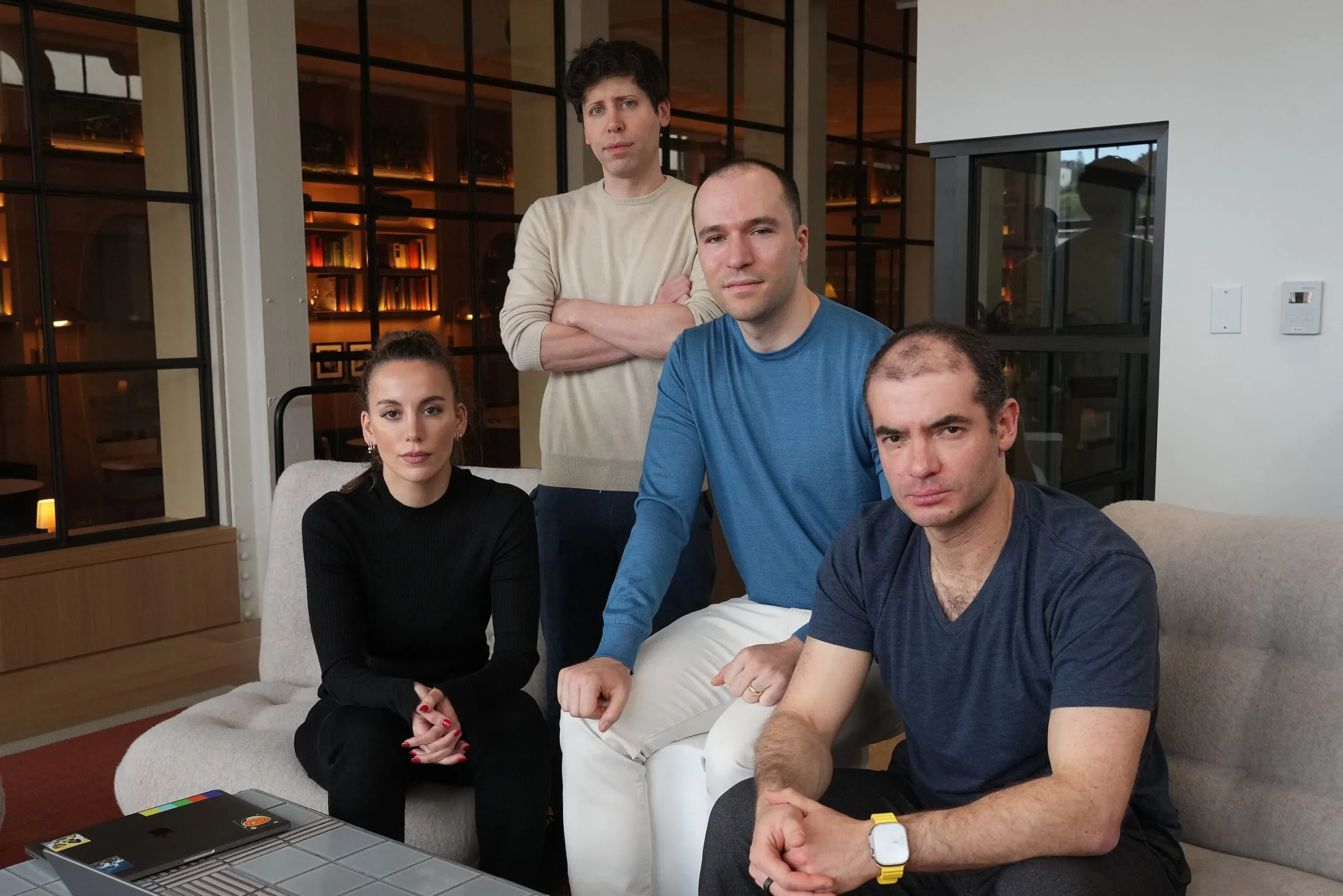
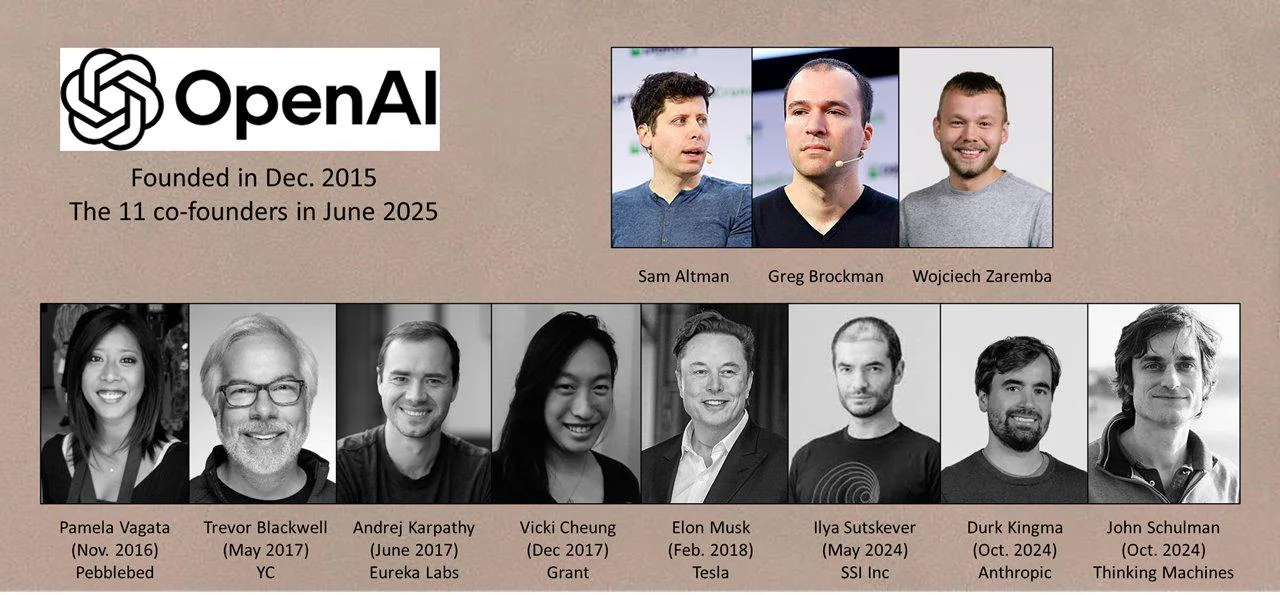
- The founding level: OpenAI was founded in 2015 by a group that included Sam Altman, Greg Brockman, Ilya Sutskever, John Schulman, and Wojciech Zaremba. Elon Musk was also involved at the founding stage.
- The research level: ChatGPT came from earlier work on GPT models and instruction-following systems such as InstructGPT.
- The training level: Human AI trainers and labelers helped shape the model through supervised fine-tuning and reinforcement learning from human feedback.
So, if you want the most accurate wording, say this: OpenAI created ChatGPT, and it was developed by a large team across research, engineering, safety, and product functions.
Which People Played the Biggest Roles in ChatGPT’s Creation?
Several OpenAI leaders and researchers played major roles, but no single person can claim full authorship.
The table below clears up the names you see most often.
| Person / Group | Role in the Story | What You Should Know |
|---|---|---|
| OpenAI | Creator organization | OpenAI built and released ChatGPT |
| Sam Altman | Co-founder and CEO | Helped lead OpenAI, but did not build ChatGPT alone |
| Greg Brockman | Co-founder and technical leader | Helped shape OpenAI’s engineering and product direction |
| Ilya Sutskever | Co-founder and research leader | Played a major role in deep learning research at OpenAI |
| John Schulman | Founding researcher | Important in reinforcement learning and alignment work |
| Wojciech Zaremba | Co-founder and researcher | Part of OpenAI’s early technical foundation |
| Human AI trainers | Training contributors | Helped teach the model through ranked responses and dialogue examples |
| Broader OpenAI research teams | Development teams | Improved GPT models, alignment, safety, and deployment |
OpenAI’s 2015 introduction named Ilya Sutskever as research director, Greg Brockman as CTO, and listed founding members including John Schulman and Wojciech Zaremba. Sam Altman and Elon Musk were named as co-chairs at that time. (Source: OpenAI, “Introducing OpenAI,” 2015.)
That history explains why these names keep showing up. But it still does not change the main answer: OpenAI created ChatGPT.
Why Do People Think Sam Altman or Elon Musk Created ChatGPT?
People often confuse company leadership with product authorship.
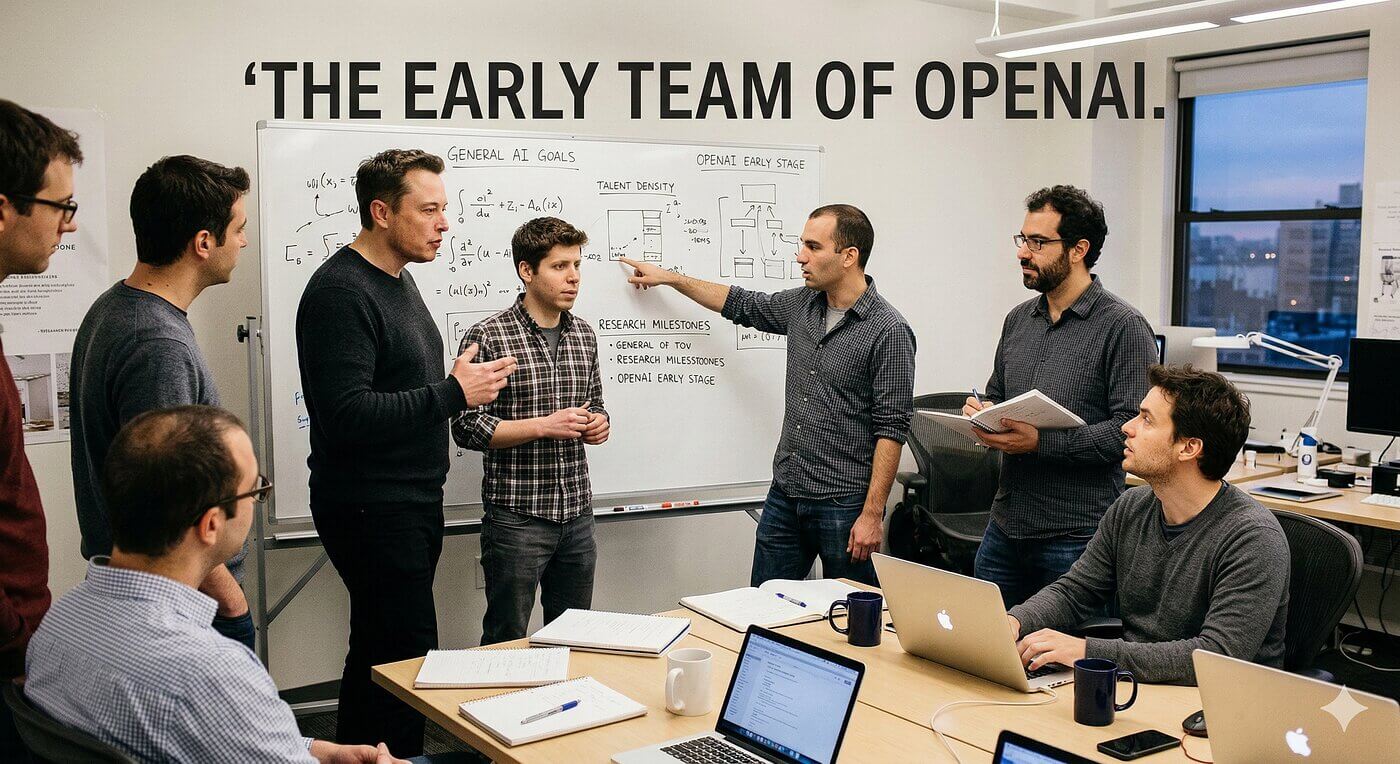
Sam Altman became the public face of OpenAI. That made many people assume he personally invented ChatGPT. He did co-found OpenAI and later became its CEO. He is central to the story. But ChatGPT was not a one-person invention.
Elon Musk appears in the story for a different reason. He helped launch OpenAI in 2015. That is true. But he did not create ChatGPT himself, and he had left OpenAI long before ChatGPT launched in late 2022.
This is the easiest way to separate the facts:
- Sam Altman helped lead OpenAI. He is one of the best-known figures behind the company.
- Elon Musk helped start OpenAI. He was part of the founding chapter, not the full ChatGPT product story.
- OpenAI’s teams built ChatGPT. The product came from collective research and engineering work.
If you are answering in one sentence, say this: Sam Altman helped lead the company behind ChatGPT, but OpenAI created ChatGPT through team-based research and development.
How Did OpenAI Build ChatGPT?
OpenAI built ChatGPT by fine-tuning a GPT-3.5 model with human feedback so it could hold better conversations.
This is where the story moves from people to process. OpenAI explained that ChatGPT is a sibling model to InstructGPT. It also said ChatGPT was trained using reinforcement learning from human feedback, often shortened to RLHF.
Here is the process in plain English:
- OpenAI started with a large language model.
The launch version of ChatGPT was fine-tuned from the GPT-3.5 series. That gave it broad language ability. - Human trainers wrote example conversations.
OpenAI said human AI trainers played both sides of a dialogue. They wrote sample exchanges between a user and an assistant. - The model learned from those examples.
This stage is called supervised fine-tuning. It teaches the system what a useful answer should look like. - Trainers ranked different answers.
OpenAI collected comparison data. Trainers looked at several answers and ranked which one was better. - OpenAI trained a reward model.
That reward model learned which kinds of answers humans preferred. - The system was improved through RLHF.
OpenAI used those human preferences to push the model toward more helpful dialogue behavior.
That method was not invented from nothing at the moment ChatGPT launched. It built on earlier OpenAI alignment work and on InstructGPT research. InstructGPT showed that human feedback could make models better at following instructions and reduce some harmful or unhelpful outputs. (Source: OpenAI, “Aligning Language Models to Follow Instructions,” and the InstructGPT research paper on arXiv, 2022.)
What Is the Difference Between GPT, InstructGPT, and ChatGPT?
GPT is the base model family, InstructGPT improved instruction-following, and ChatGPT turned that progress into a conversational product.
A lot of confusion comes from these names. They sound similar, but they are not the same thing.
| System | Main Purpose | Why It Matters |
|---|---|---|
| GPT | General language model family | Provides the base language ability |
| InstructGPT | Instruction-following improvement | Teaches the model to follow user requests better |
| ChatGPT | Conversation-focused chatbot product | Makes the interaction feel like a natural chat |
You can think of it this way:
- GPT gave the raw language power.
- InstructGPT made the model better at following directions.
- ChatGPT packaged those gains into a public chatbot with dialogue behavior.
OpenAI directly called ChatGPT a “sibling model” to InstructGPT. It also said ChatGPT used the same RLHF method with some differences in the data setup. (Source: OpenAI, “Introducing ChatGPT,” Nov. 30, 2022.)
That is why the best answer to who invented ChatGPT is not just a list of names. It is also a chain of technical steps.
When Was ChatGPT Released and How Fast Did It Grow?
ChatGPT was released on November 30, 2022, and it grew at an unusually fast pace.
OpenAI launched ChatGPT as a research preview. At first, it was framed as a way to gather feedback and learn about strengths and weaknesses. That sounds modest now. But the public reaction was huge.
By February 2023, Reuters reported that analysts at UBS estimated ChatGPT had reached 100 million monthly active users in January, only about two months after launch. That made it one of the fastest-growing consumer applications ever recorded at the time. (Source: Reuters, Feb. 1, 2023, citing UBS.)
Here is the early timeline that matters most:
| Date | Event | Why It Matters |
|---|---|---|
| 2015 | OpenAI was founded | The company behind ChatGPT begins |
| 2022 | InstructGPT work gains visibility | Human feedback methods move closer to products |
| Nov. 30, 2022 | ChatGPT launches | Public release starts the chatbot boom |
| Jan. 2023 | Estimated 100M monthly users | ChatGPT becomes a mainstream consumer tool |
This fast growth changed the public conversation around AI. Before ChatGPT, large language models were mostly discussed by researchers, developers, and tech watchers. After ChatGPT, everyday users began testing AI for writing, coding, research, and study help.
What Problem Did ChatGPT Solve for Everyday Users?
ChatGPT solved access and usability problems by turning advanced AI into a simple chat interface.
Before ChatGPT, powerful language models already existed. The problem was that they did not always feel easy to use. Many users needed prompt tricks, API access, or technical context. ChatGPT lowered that barrier.
It solved several real user problems at once:
- It reduced friction.
You could ask a question in plain language and get a direct answer. - It improved follow-up conversations.
You could ask a second question, correct the first prompt, or change direction. - It made AI feel practical.
Users quickly saw uses for schoolwork, summaries, drafts, coding help, and brainstorming. - It made advanced AI visible.
You did not need to understand model architecture to test what it could do.
This is also why the creator question matters. People were not just asking who built a model. They were asking who built the first AI chatbot that felt usable to millions of normal users.
If you want to understand how the product evolved after launch, ChatGPT-3.5 vs GPT-4 vs GPT-5 gives a useful model history. If you are new to the platform itself, How to Use ChatGPT for Beginners is a practical next read.
How Has ChatGPT Changed Since Its Original Release?
ChatGPT has changed from a GPT-3.5 research preview into a broader product family with stronger models, more tools, and more plan options.
The original release was important, but it was only the beginning. Since launch, ChatGPT has expanded far beyond a simple text chatbot. OpenAI has added stronger models, paid tiers, more tools, and richer workflows.
The key shift is this: the creator stayed the same, but the product kept evolving. OpenAI remained the organization behind ChatGPT, while the system itself moved through new model generations and product layers.
You can see that evolution in these related guides:
- ChatGPT Free vs Paid: Which Plan Actually Fits Your Needs?
- ChatGPT Plus
- Does ChatGPT Train on My Data? (Full Guide for 2026)
Those internal pages help answer a practical follow-up question many readers have: “Who created ChatGPT?” is often the first question. “What is ChatGPT now?” is the second.
How Can You Separate the Myths From the Facts?
You can separate myth from fact by checking whether a claim points to the company, the founders, or the actual training process.
This simple filter saves time. Many articles mix all three.
Who Actually Gets Credit for Creating ChatGPT?
OpenAI gets the primary credit because it built and released the product.
That is the safest and most accurate wording for search, publishing, and factual writing.
Who Helped Build the Foundation Behind ChatGPT?
The OpenAI founding team and later research teams helped build the foundation.
That includes leadership, scientists, engineers, and human trainers who shaped the model’s behavior.
Who Did Not Create ChatGPT Alone?
No public figure created ChatGPT alone.
Not Sam Altman. Not Elon Musk. Not one single engineer. The product is too large, too technical, and too team-driven for that kind of simple credit line.
Facts About ChatGPT
If you want the version you can quote fast, use these points:
- Creator: OpenAI
- Launch date: November 30, 2022
- Base model: GPT-3.5 series
- Core method: supervised fine-tuning plus RLHF
- Key people in the larger story: Sam Altman, Greg Brockman, Ilya Sutskever, John Schulman, Wojciech Zaremba, and many others
- Best correction to a common myth: ChatGPT was not invented by one person
That summary satisfies most user intent. It also matches the public record more closely than social-media shortcuts.
What Are the Most Common Questions About Who Invented ChatGPT?
Did Sam Altman invent ChatGPT by himself?
No. Sam Altman co-founded OpenAI and led the company, but ChatGPT was built by OpenAI teams, not by one person alone.
Did Elon Musk create ChatGPT?
No. Elon Musk helped launch OpenAI in 2015, but he did not create ChatGPT himself and was not the sole force behind the product released in 2022.
Is OpenAI the real creator of ChatGPT?
Yes. OpenAI is the organization that trained, built, and released ChatGPT to the public.
Was ChatGPT built from GPT-3.5?
Yes. OpenAI said ChatGPT was fine-tuned from a model in the GPT-3.5 series.
Did human trainers help create ChatGPT’s behavior?
Yes. OpenAI said human AI trainers provided conversations and ranked outputs, which helped shape the system through RLHF.
Is “who invented ChatGPT” the same as “who founded OpenAI”?
No. The questions are related, but they are not identical. Founding OpenAI and creating ChatGPT are part of the same story, yet they happened at different stages and involved many people.
Did ChatGPT start as a finished product?
No. OpenAI launched ChatGPT as a research preview and used feedback to improve it over time.
What Should You Remember About Who Created ChatGPT?
You should remember one main fact: OpenAI created ChatGPT, and it was the result of team-based research, not one person’s solo invention.
That is the answer that holds up under fact-checking. It respects the public record. It also avoids the lazy myth that one famous executive built the whole thing alone.
If you came here asking who created ChatGPT or who invented ChatGPT, now you have the full picture. OpenAI built it. The company stood on research from earlier GPT systems, instruction-following work, and human feedback training. Key leaders and researchers mattered, but the product itself came from a deep team effort.
If you want to keep going, the smartest next step is to move from history to practical use. Start with the model timeline, learn the current plan differences, and understand how your data is handled. That way, you do not just know who made ChatGPT. You know what it is, how it works, and what it means for you now.
You May Also Like
 AI Tool Reviews
How to Use ChatGPT for Beginners: The Complete Step-by-Step Guide (2026)
 ChatGPT
How to Use ChatGPT at Work: Productivity Tips That Actually Save You Hours
 ChatGPT
How to Use ChatGPT Best Prompts
 AI Models
GPT-5.5 vs Claude Opus 4.7 vs Gemini 3.1 Pro: Real Benchmark Results Compared
 ChatGPT
ChatGPT 5.5 Is Here: Benchmarks, What’s New, What’s Different, and Is It Actually Worth the Hype?
 ChatGPT