
Perplexity and ChatGPT are both popular AI chatbots right now. You want to know which tool helps you finish your work faster, with fewer mistakes, and less backtracking. That is the real user intent here.
I have looked at both through the lens that matters most to you: what happens when you need current facts, clean writing, deeper research, file analysis, and clear next steps. When I compare them side by side, the difference feels practical, not abstract. One feels like a fast research desk. The other feels like a full workbench. That gap matters when your deadline is close, your draft is messy, or your source list needs to hold up under review.
Here is my experience before we go deeper. Perplexity is usually the better pick when your first need is web research with visible citations. ChatGPT is usually the better pick when your job includes writing, rewriting, analyzing files, brainstorming, image work, voice, and longer multi-step tasks. Both can search. Both can summarize. Both can still make mistakes. That last point is the one you should never ignore.
Why does this comparison matter so much right now?
It matters because these tools now shape how people research, write, study, and make decisions every day. ChatGPT has grown to over 700 million weekly active users, and OpenAI says it is used across writing, research, programming, and analysis at work. Perplexity has pushed hard in the other direction: faster source-backed answers, deep research, premium data, and search-first workflows.
That means you are not choosing between two novelty apps anymore. You are choosing between two different ways of working. If you pick the wrong one for your workflow, you waste time. You end up rewriting weak drafts, checking shaky citations, or jumping between tabs to do tasks your tool should have handled in one place.
Perplexity Vs ChatGPT Difference
Perplexity is built around finding and citing information, while ChatGPT is built around helping you do many kinds of work in one conversation. That is the clearest way to separate them.
Perplexity starts with search. Its own help center says it searches the internet in real time, gathers information from sources, and returns a summary with numbered citations. That makes it feel direct. You ask. It searches. It cites. You scan the answer, then check the sources if needed.
ChatGPT starts from a broader idea. OpenAI positions it as a tool for answers, voice conversations, web search, data analysis, chart creation, image understanding, and image generation. In other words, it is not only a search tool. It is a writing tool, a thinking tool, a file tool, and in many cases a workflow tool.
Here is the simplest comparison table.
| Category | Perplexity | ChatGPT | What it feels like in practice |
|---|---|---|---|
| Core identity | Answer engine | General AI assistant | Perplexity starts with search; ChatGPT starts with task execution |
| Search | Real-time search is central | Search is one major feature | Perplexity feels more search-native |
| Citations | Numbered citations are standard | Search responses include links to sources | Perplexity makes source checking faster |
| Writing | Good for summaries and research-backed drafts | Strong for drafting, editing, tone control, and iteration | ChatGPT feels stronger for polished writing |
| Files | Supports file exploration and analysis | Supports file upload, analysis, and chart creation | ChatGPT feels broader for file work |
| Voice and images | More limited as a core identity | Voice, image discussion, and image creation are central | ChatGPT feels more multimodal |
| Memory and continuity | Contextual follow-up in threads | Formal memory controls and long-term personalization | ChatGPT feels more personalized |
| Deep research | Search-heavy autonomous reports | Agentic multi-step research reports | Both are strong, but different in style |
Which tool solves the biggest problems most people have?
Perplexity solves the “I need current facts with sources” problem better, while ChatGPT solves the “I need to turn information into finished work” problem better.
This is where the comparison becomes useful. You are not buying features. You are trying to remove friction from your day.
- If your problem is finding current information fast, Perplexity usually reduces the most friction. You get a compact answer, visible citations, and a path to verify what it pulled. That helps when you are checking prices, trends, market news, or source-backed overviews.
- If your problem is turning a rough idea into a polished draft, ChatGPT usually saves more time. It can outline, rewrite, shorten, expand, change tone, organize sections, and stay inside a longer working session.
- If your problem is “I have files and need insight”, ChatGPT often feels stronger because OpenAI highlights file uploads, analysis, and chart creation as core features. Perplexity also supports file analysis, but its product identity still leans toward research-first use.
- If your problem is “I need a research report, not just a quick answer”, both now compete hard. Perplexity Deep Research emphasizes dozens of searches and hundreds of sources. ChatGPT Deep Research emphasizes multi-step agentic investigation across text, images, and PDFs.
- If your problem is “I want one tool for many jobs”, ChatGPT usually wins. If your problem is “I need to verify claims quickly” Perplexity usually wins.
That is the pattern I keep coming back to. One helps you find. The other helps you build.
Perplexity AI vs ChatGPT comparison across common tasks
The side-by-side difference shows up fastest when you test research, writing, and file work back to back.
When I map both tools against the same task types, the personality gap becomes obvious. Perplexity feels sharper at the start of the workflow. ChatGPT feels stronger in the middle and at the end.
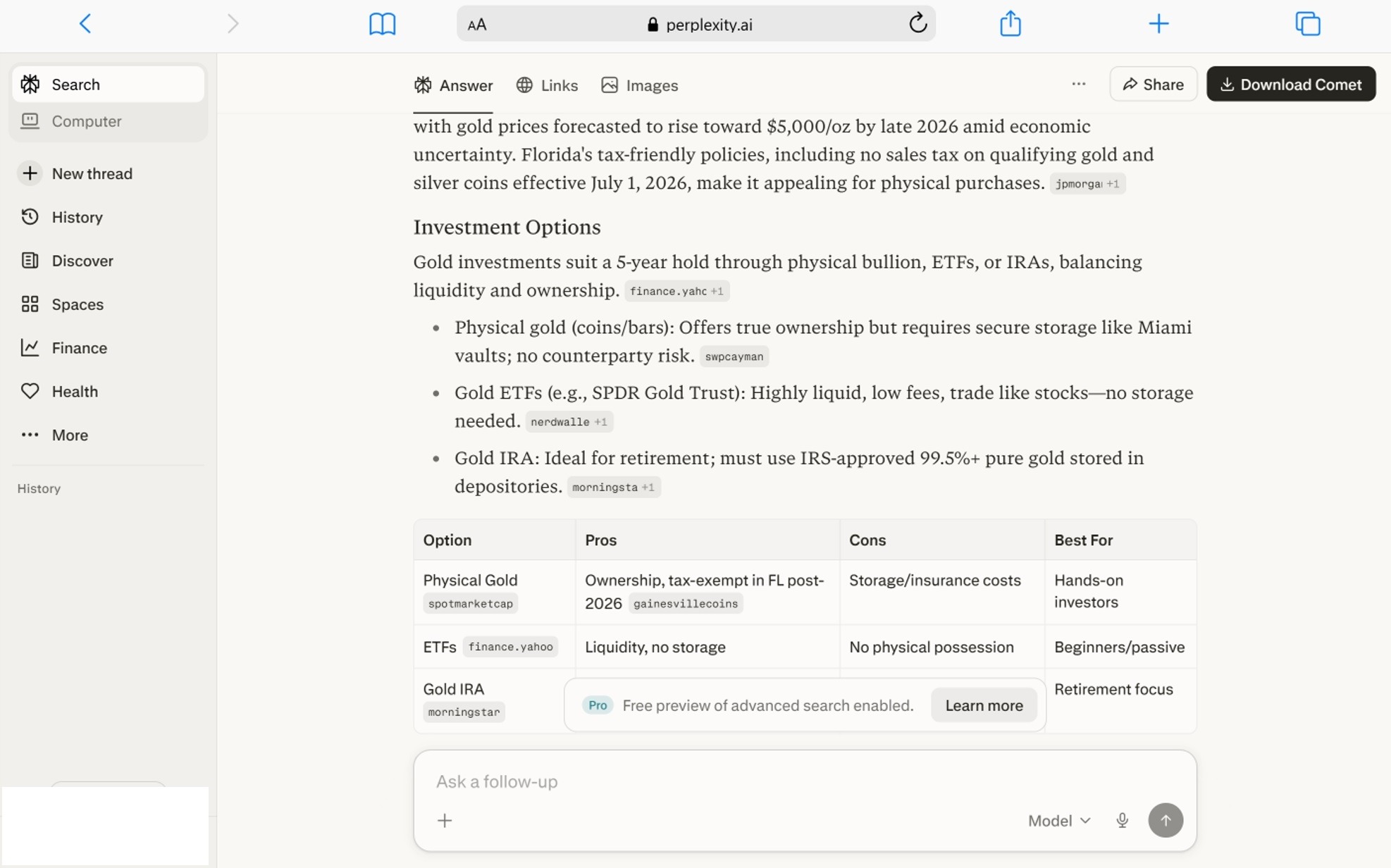
Take a current-events or market question. If you ask for the latest rate cut signals, home sales comps, or competitor funding news, Perplexity’s answer structure makes it easier to see where the information came from. That lowers your checking time. It is built for that moment. Perplexity even markets its Pro product around decision support, cited reports, and model orchestration for current research.
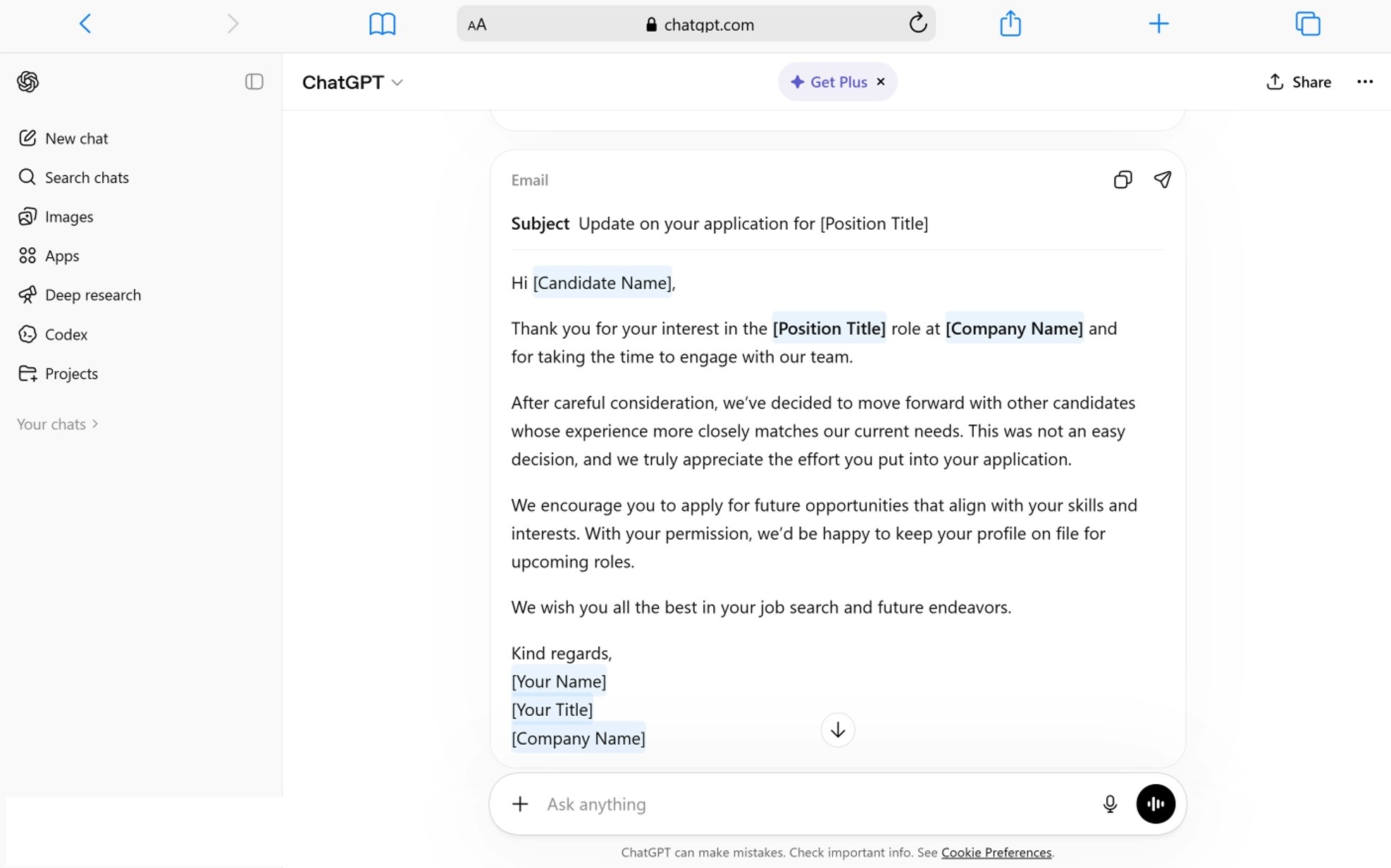
Now switch to a messy draft. Say you already gathered notes and need a clean article, email sequence, pitch, or report. ChatGPT feels more comfortable here. OpenAI highlights writing support, canvas collaboration, data analysis, image work, voice conversations, and memory controls. That broader working environment matters when you are revising instead of merely searching.
The same thing happens with file tasks. If you upload a CSV and want charts, or hand over a document and ask for a structured breakdown, ChatGPT is clearly designed for that type of mixed work. Perplexity can explore files too, and its Pro plan includes file and analysis support, but its strongest identity is still research with citations, not a full creative workspace.
So if you want the most honest human summary, it is this: Perplexity helps you trust the starting point faster. ChatGPT helps you shape the final output faster.
Which tool is better for research?
Perplexity is usually better for quick research, but ChatGPT is increasingly strong for deeper research workflows.
If your question is simple and current, Perplexity often feels like the better first stop. Its product flow is built around real-time search, source gathering, and citation-backed summaries. The citations are not hidden. They are part of the normal answer structure. That makes it easier to scan, compare, and verify.
ChatGPT, on the other hand, now has a stronger research story than many people assume. OpenAI says ChatGPT Search gives timely answers with links to relevant web sources, and ChatGPT Deep Research can conduct multi-step research across hundreds of sources and synthesize them into a documented report. That moves ChatGPT beyond “chatbot” territory when you need more than a short answer.
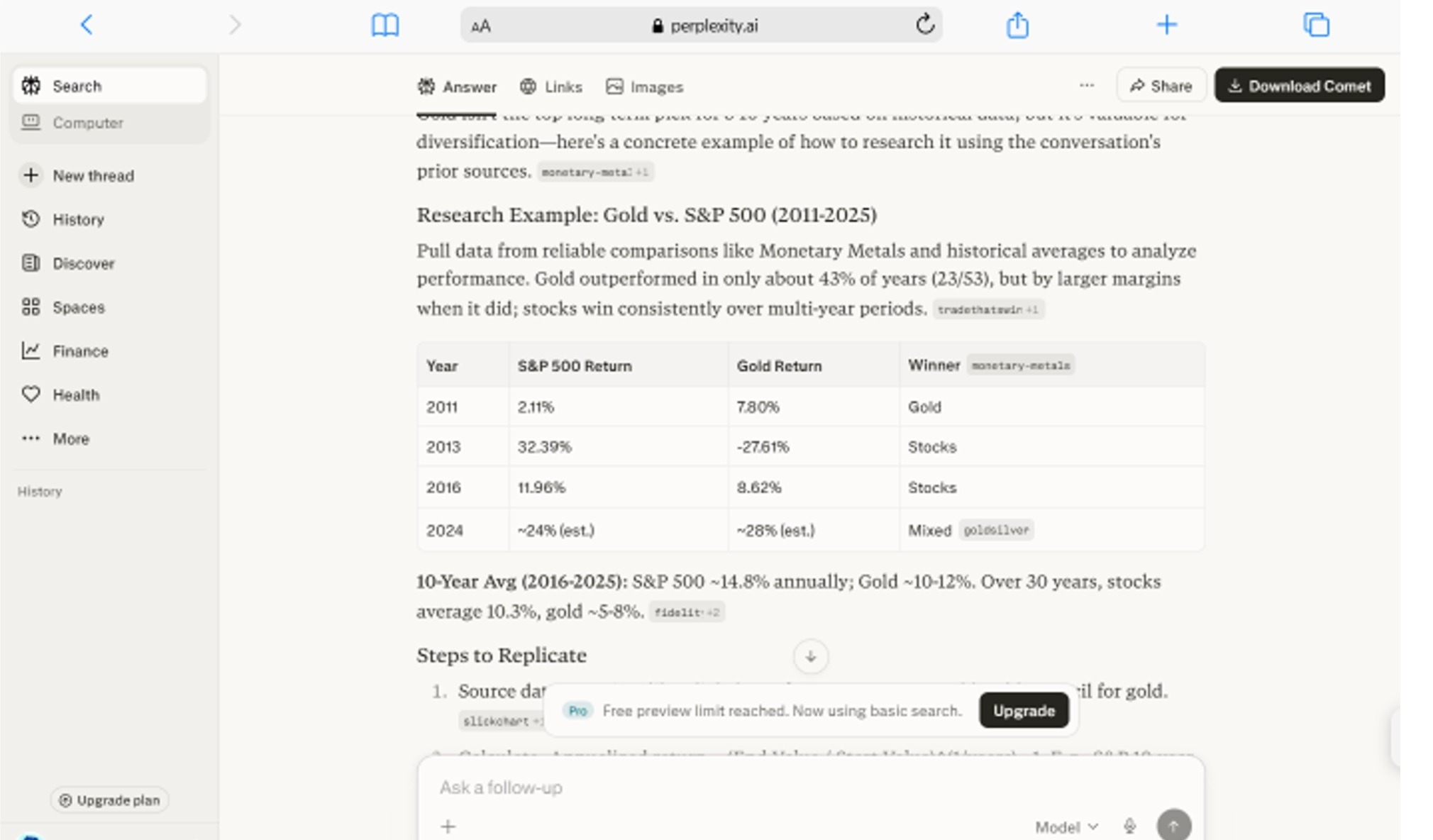
Here is the research comparison that matters.
| Research need | Better choice | Why |
|---|---|---|
| Quick source-backed answer | Perplexity | Search-first design and visible citations |
| Fast overview of a topic | Perplexity | Short, direct, and easy to verify |
| Long, multi-step research task | ChatGPT or Perplexity | Both now offer deep research workflows |
| Research plus writing | ChatGPT | Stronger drafting and restructuring after research |
| Research plus charts or file analysis | ChatGPT | Better support for files and visual output |
| Research plus premium data feel | Perplexity Pro | Markets premium citations and data sources |
There is one more issue you should care about. Citations do not guarantee accuracy. Columbia Journalism Review’s Tow Center tested eight AI search tools and found citation problems across the board. In that study, ChatGPT Search incorrectly identified 134 out of 200 articles, while Perplexity answered 37 percent of tested queries incorrectly. The study also warned that these systems can sound confident even when they are wrong. That does not mean the tools are useless. It means you should treat citations as a starting point for verification, not proof of truth.
That warning matters even more if you work in finance, health, law, or education. In those areas, a neat answer can still carry a costly error.
Which tool is better for writing and editing?
ChatGPT is better for writing, rewriting, and polishing content. This is the section where the gap becomes clear. ChatGPT is designed to support a broader writing loop. It can help you brainstorm, outline, draft, expand, shorten, change reading level, shift tone, and revise across multiple turns. OpenAI also positions canvas, voice, image support, and memory as part of the product experience, which gives writing work more continuity.
Perplexity can write. It can summarize. It can turn research into readable prose. But its writing tends to feel more tied to the research answer format. That is useful when you want a cited brief. It is less ideal when you want a sharp landing page, a nuanced brand voice, or several rounds of editorial refinement.
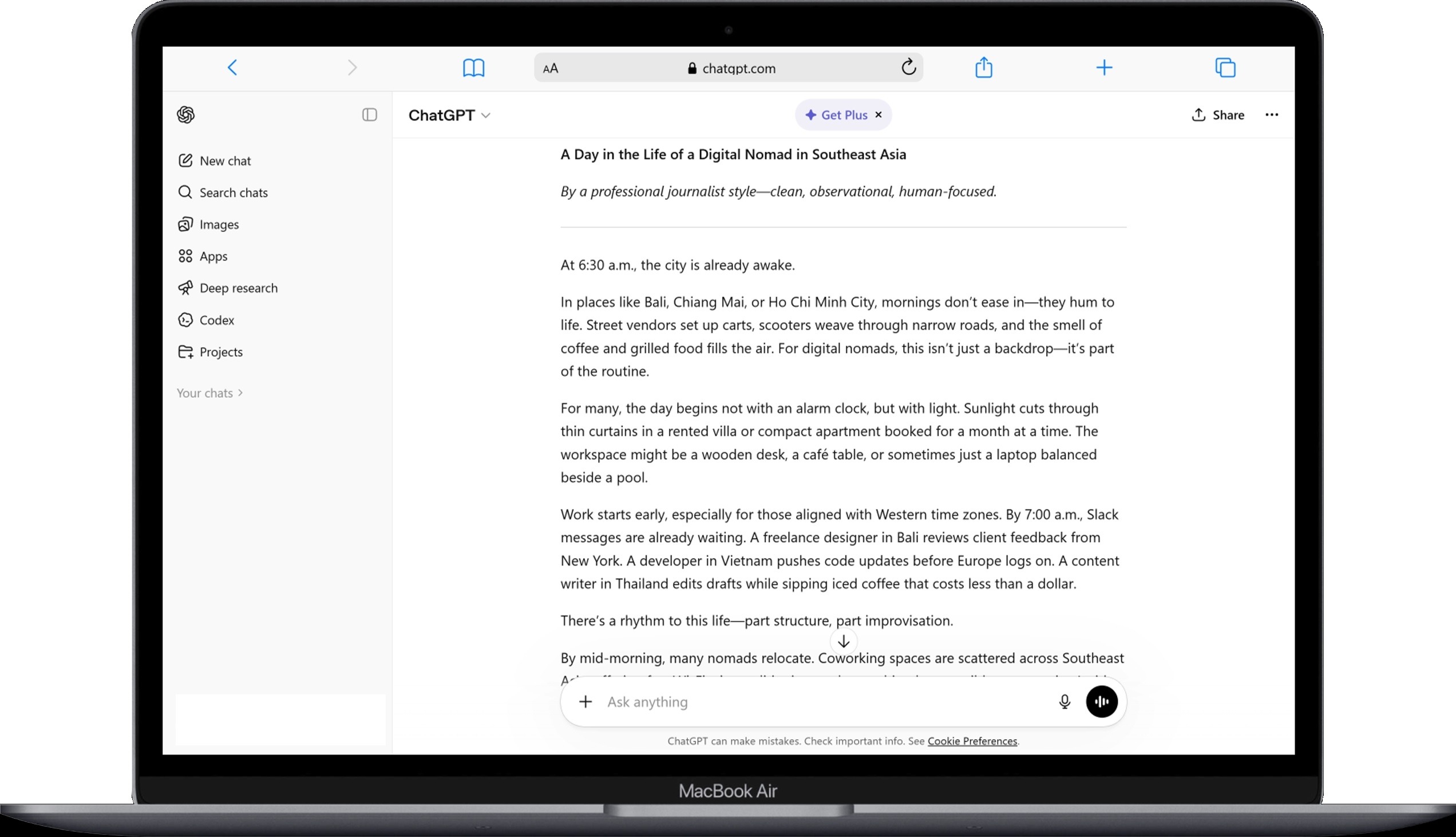
Here is where I would draw the line.
- Choose ChatGPT if your work includes blog posts, scripts, sales pages, emails, reports, or rewrites.
- Choose Perplexity if your writing starts with a research brief and citations matter more than style.
- Use both together if you want the best workflow: research in Perplexity, then drafting and polishing in ChatGPT.
If your goal is ranking content, not just readable content, this difference matters. Search-focused content needs facts, structure, and depth. But it also needs flow, intent matching, transitions, and clear editorial control. ChatGPT usually gives you more control over that final layer.
Perplexity AI vs ChatGPT, which is better for current information?
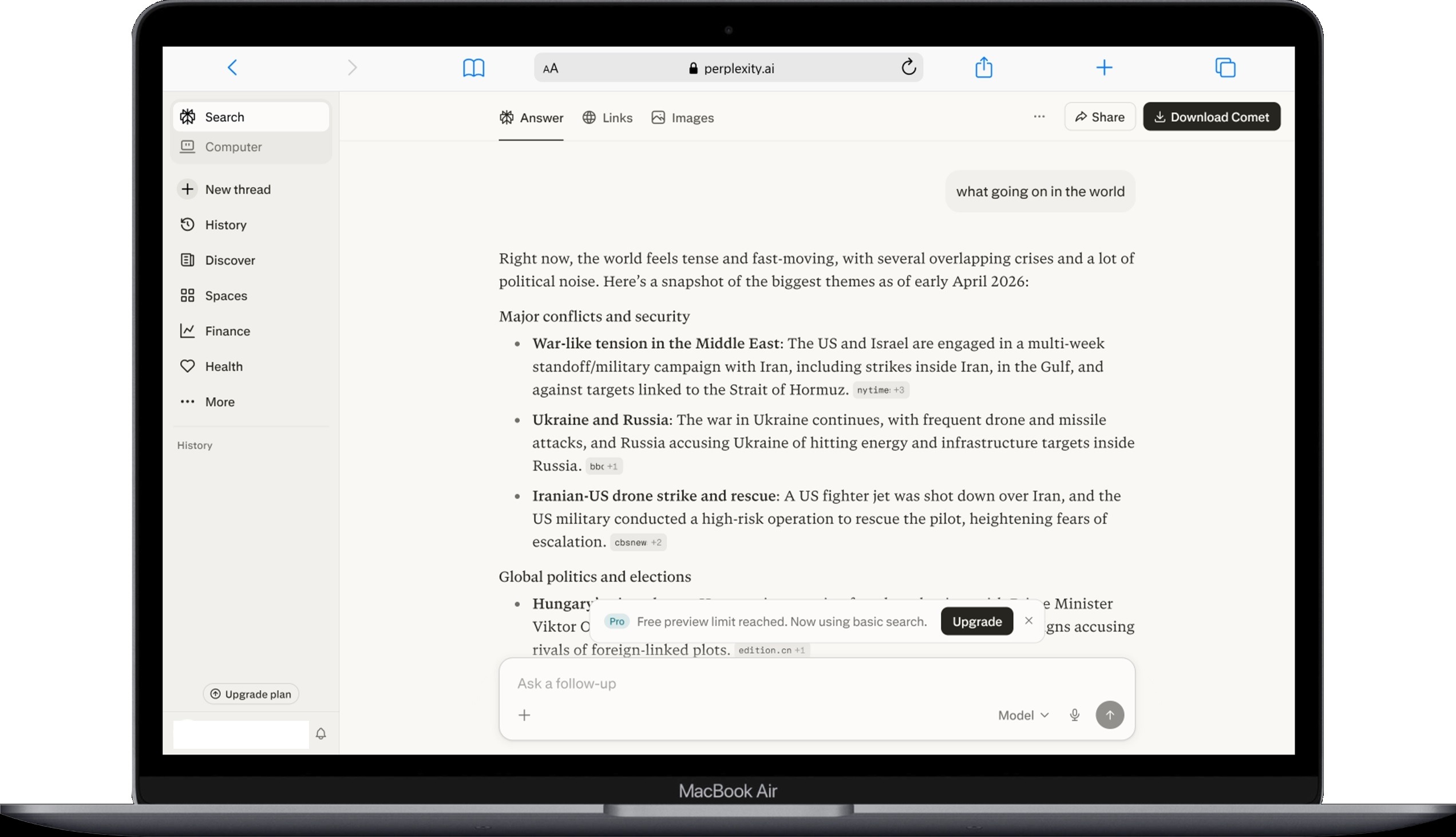
In my experience, Perplexity AI is usually better when freshness is the main priority. This is one of the easiest sections to answer. Perplexity’s own product description centers on real-time internet search and cited answers. That makes it a natural fit for fresh information, trend checking, news summaries, and fast comparisons that depend on recent data.
Whereas ChatGPT searches the web, either automatically or when you choose the web search icon, and then provides timely answers with links to relevant sources. That is a major improvement. Still, if you ask me which tool feels more naturally built for “what happened this week,” Perplexity still feels like the cleaner match.
Featured snippet answer: Perplexity is often better for live web lookups, while ChatGPT is often better once you need interpretation, rewriting, or follow-up work.
Which tool is better for deep research reports?
Both are strong, but they shine in different ways. Perplexity Deep Research says it performs dozens of searches, reads hundreds of sources, reasons through the material, and delivers a report in about 2 to 4 minutes. It also claims 21.1 percent accuracy on Humanity’s Last Exam and 93.9 percent on SimpleQA, while saying most research tasks finish in under 3 minutes.
Based on my experience so far and having tested ChatGPT Plus with the GPT-5.4 model. ChatGPT Deep Research can complete multi-step internet research, analyze hundreds of sources, and generate a comprehensive report at the level of a research analyst. OpenAI also reports 26.6 percent accuracy on Humanity’s Last Exam and state-of-the-art results on the GAIA benchmark.
Here is the cleaner comparison.
| Deep research factor | Perplexity Deep Research | ChatGPT Deep Research |
|---|---|---|
| Core promise | Search-heavy report generation | Agentic multi-step research and synthesis |
| Time promise | Usually 2 to 4 minutes | Tens of minutes for harder tasks |
| Inputs | Web sources, reasoning, research mode | Web, text, images, PDFs, data analysis |
| Benchmark claim | 21.1% on Humanity’s Last Exam; 93.9% on SimpleQA | 26.6% on Humanity’s Last Exam; SOTA on GAIA |
| Output style | Fast, cited report | Documented, analyst-style report |
| Best fit | Faster research briefs | Broader, more complex investigations |
You should still read benchmark claims with care. Benchmarks help, but they do not tell you everything about your exact task. A strong score does not mean perfect citations. A fast report does not mean sound judgment. What it does tell you is that both companies now treat research as a serious product area, not a side feature.
If your work is analyst-heavy, I would not reduce this choice to one winner. I would ask a better question: Do you want the fastest cited brief, or the broader research agent? That question usually leads you to the right pick.
Which tool handles files, data, images, and voice better?
ChatGPT is better for multimodal work and mixed-format tasks. Why? ChatGPT supports voice conversations, image uploads, image understanding, image generation, file uploads, data analysis, and chart creation. That is not one narrow feature. It is a wide task surface.
Perplexity Pro also supports file upload and analysis. Its help center says users can upload PDFs, CSVs, audio, video, and images. Perplexity also markets project-style capabilities through features tied to reports, documents, apps, and its broader productivity layers.
Still, the everyday difference is hard to miss. ChatGPT feels more complete when your work crosses formats. That matters if you move between notes, spreadsheets, screenshots, charts, images, and written output in the same session.
- For CSVs and charts, ChatGPT has the clearer official positioning.
- For image questions and image generation, ChatGPT has the stronger built-in story.
- For voice conversations, ChatGPT is much more central to that use case.
- For file-backed research, both can help, but ChatGPT usually feels broader.
If your workflow looks like a normal office day, not a pure research session, ChatGPT often ends up being the more practical tool.
Which tool should you trust more?
You should trust neither tool blindly, but Perplexity usually makes verification easier.
That is the most honest answer I can give you.
Perplexity has a trust advantage at the interface level because citations are built into the normal answer flow. You can move from claim to source quickly. That is useful. It builds a sense of control.
ChatGPT has improved trust by adding web search with source links and documented deep research outputs. But the experience is still broader than “citation-first.” In many tasks, that is a strength. In pure factual checking, it can mean one extra step.
But here is the part you should remember tomorrow, not just today: a citation can still point to the wrong thing, the wrong version, or a weak interpretation. The Tow Center study matters because it shows how easy it is to mistake confidence for accuracy. This is the core trust problem with both tools. They are persuasive. They are fast. They are often helpful. They are not self-auditing experts.
So if your work can affect money, health, grades, hiring, or legal decisions, your process should look like this:
- Use the AI tool to reduce research time.
- Check the original source, not only the summary.
- Confirm key numbers in the source itself.
- Watch for syndicated copies instead of the original publisher.
- Do not confuse a smooth answer with a safe answer.
That is not fear. That is mature AI use.
What does pricing look like in real life?
Perplexity is cheaper at the Pro level than ChatGPT Pro, but ChatGPT Plus and Perplexity Pro are both positioned as mainstream paid upgrades.
ChatGPT Plus costs $20 per month and includes faster responses, higher limits, advanced models, voice, image generation, file uploads and analysis, deep research where available, and custom GPTs. While ChatGPT Pro costs $200 per month and adds broader access, higher limits, advanced voice, extended deep research, ChatGPT agent access, Sora access, and early features. You can also try ChatGPT Go, a cheaper plan at only $8 per month.
Perplexity’s official pricing pages show Pro at $20 per month or $200 per year, Enterprise Pro at $40 per seat per month or $400 per year, and Enterprise Max at $325 per seat per month or $3,250 per year. The same pricing view says Pro includes up to 200 Pro queries per week, up to 20 Deep Research queries per month, asset generation limits, file upload access, model choice, and other paid features.
Here is the pricing snapshot.
| Plan | Current listed price | Who it fits best |
|---|---|---|
| ChatGPT Free | Free | Casual use |
| ChatGPT Plus | $20/month | Writers, students, knowledge workers |
| ChatGPT Pro | $200/month | Power users who need higher limits and premium access |
| Perplexity Free | Free | Light search and quick fact finding |
| Perplexity Pro | $20/month or $200/year | People who want better research and citations |
| Perplexity Enterprise Pro | $40/seat/month or $400/year | Teams and organizations |
| Perplexity Enterprise Max | $325/seat/month or $3,250/year | High-demand enterprise use |
If your budget is tight, the real comparison is usually ChatGPT Plus vs Perplexity Pro. If you are deciding between the $200 tiers, then the question changes. At that point, you are choosing your main professional AI environment, not just a paid upgrade.
Which tool is better for your job or study style?
The best tool depends less on the brand and more on the shape of your day.
Here is the practical breakdown I would use if you asked me for a straight recommendation.
- If you are a student, pick Perplexity when you need faster source discovery and citation trails. Pick ChatGPT when you need explanation, structure, simplification, and draft help. Use extra caution with both on citations and factual claims.
- If you are a marketer, ChatGPT usually gives you more value because messaging, copy variation, rewrite speed, idea expansion, and format switching matter every day. Perplexity becomes the research arm for competitor checks and market scanning.
- If you are a founder or operator, Perplexity is strong for quick market checks, funding scans, and sourced overviews. ChatGPT is stronger for decision memos, product docs, hiring rubrics, launch copy, and spreadsheet-adjacent thinking.
- If you are an analyst or researcher, Perplexity may save time at the front of the workflow. ChatGPT may save time in synthesis and output shaping. Many people in this group will get the best result from using both.
- If you are a developer, ChatGPT often feels more useful because coding, debugging, multi-step reasoning, drafting docs, and file work all happen in one place. Perplexity still helps with quick research and source collection.
This is why broad “winner” articles often miss the point. Your work has texture. Your tool choice should match it.
Can you get better results by using both together?
Yes, using both together is often the smartest setup.
This is not a cop-out answer. It is the workflow I would recommend to most serious users who write or research for a living.
Here is the cleanest split.
- Start in Perplexity when the topic is fresh, factual, or source-sensitive.
- Pull the best claims and sources into your notes.
- Move to ChatGPT when you need structure, argument flow, editing, simplification, or format changes.
- Return to the original sources for all high-stakes facts before publishing.
- Use your own judgment last, not first. AI should speed your process, not replace your responsibility.
That kind of workflow respects what each tool does best. It also protects you from the biggest failure mode: trusting a polished answer before checking the source.
What should you remember before you choose one?
You should choose based on workflow, not hype.
If you only remember a few points from this article, remember these:
- Perplexity is the stronger search-native tool.
- ChatGPT is a stronger all-purpose work tool.
- Perplexity usually makes source checking faster.
- ChatGPT usually makes writing and output shaping easier.
- Both tools can still hallucinate or miscite.
- For high-stakes work, always verify the source.
That is the grounded answer. It is not dramatic. It is useful.
What is the final verdict on Perplexity vs ChatGPT?
Perplexity is the better choice for fast, source-backed research, and ChatGPT is the better choice for broader work that turns ideas into finished output.
If your day starts with questions like “What changed this week?” or “Where did this claim come from?” Perplexity is often the better first tab. If your day starts with “Help me turn this into something clear, usable, and publishable,” ChatGPT is often the better main tool.
If you want one simple buying rule, use this: pick Perplexity if verification is your first problem; pick ChatGPT if production is your first problem. If you do both kinds of work often, the strongest setup is not choosing one forever. It is learning where each one earns its place in your workflow.
What questions do people still ask about Perplexity vs ChatGPT?
Is Perplexity more accurate than ChatGPT?
No, not in every case. Perplexity often makes checking easier because it shows citations by default, but independent testing found accuracy and citation problems in both tools. You should verify important claims in the original source.
Is ChatGPT better than Perplexity for writing?
Yes, for most writing-heavy workflows. ChatGPT is better suited for drafting, rewriting, changing tone, handling files, and supporting longer editorial sessions. That makes it a stronger writing partner for most users.
Is Perplexity better than ChatGPT for research?
Yes, for quick cited research. Perplexity is built around real-time search and numbered citations, so it usually feels faster for source-backed answers. ChatGPT becomes more competitive when research turns into deeper synthesis and writing.
Is ChatGPT search good enough to replace Perplexity?
No, not fully for every user. ChatGPT Search is strong and improving, but Perplexity still feels more search-native and citation-forward. If your work depends on scanning sources fast, Perplexity still holds a clear edge.
Is Perplexity Pro worth it over the free plan?
Yes, if you do frequent research. Perplexity’s paid tier adds more Pro queries, Deep Research capacity, model choice, file work, and broader productivity features. That upgrade makes sense when research is part of your weekly job, not just a random task.
Is ChatGPT Plus worth it for most people?
Yes, if you write, study, analyze files, or use AI often. ChatGPT Plus adds faster access, stronger models, voice, image generation, file analysis, and other tools that make it more useful as a daily work assistant.
Should you use both instead of choosing one?
Yes, if your work mixes research and production. Perplexity can speed up source collection, while ChatGPT can turn that material into organized, polished output. For many professionals, that is the most efficient setup.
You May Also Like
 AI Tool Reviews
How to Use ChatGPT for Beginners: The Complete Step-by-Step Guide (2026)
 ChatGPT
How to Use ChatGPT at Work: Productivity Tips That Actually Save You Hours
 ChatGPT
How to Use ChatGPT Best Prompts
 AI Models
GPT-5.5 vs Claude Opus 4.7 vs Gemini 3.1 Pro: Real Benchmark Results Compared
 ChatGPT
ChatGPT 5.5 Is Here: Benchmarks, What’s New, What’s Different, and Is It Actually Worth the Hype?
 ChatGPT